As an Amazon Associate, The Hunting Dog earns from qualifying purchases.
A person walks past the house, your dog rushes to the glass, and a few seconds later the whole room is listening. Window barking can become part of the daily routine before you notice the pattern. The quickest change you can make is to reduce access to the trigger. Then you can teach your dog what to do when something catches their attention.
Table of Contents
ToggleFind out what sets off the barking
Watch a few ordinary episodes from where you already are. Write down the time, what was visible or audible, how close your dog was to the window, and how quickly they recovered. Include a detail you can observe, such as whether they turned toward you when you spoke or kept their eyes fixed outside. These notes are more useful than guessing whether your dog is being protective. Different dogs can bark at the same delivery truck for different reasons.
Try the same room with the lower view covered for a busy part of the day. If the barking drops when pedestrians disappear behind the cover, sight is probably part of the trigger. If your dog still runs to the glass at the sound of a gate or a car door, work on the sound as well. A dog who barks in several rooms as soon as you leave may need a different plan. A short recording taken during a normal departure can show whether the dog settles or continues pacing, vocalizing, or scratching at exits.
Make the room easier before you start training
Start with the window that produces the most episodes. Draw a curtain, move the back of a sofa away from the sill, or use an interior room during the school run. Walk through the setup at your dog’s eye level. A narrow gap between curtains can still frame the exact place where people pass. A dog who stands on a chair can see above a strip of film that worked when they were on the floor. Check both positions.
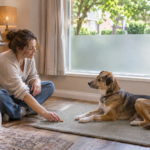
Leave your dog an inviting place to settle away from the glass. A blanket on a nonslip floor is enough to start. Choose a spot where the dog can see you and move away freely, and leave a clear route between the mat and the rest of the room. If delivery sounds still set them off, try closing the inner door or adding quiet background sound during the busy period. Compare what happens with and without it before buying equipment. Keep cords and loose film edges out of reach.
Removable frosted film can soften the view through the lower pane while letting in daylight. Measure the glass against your dog’s usual sightline. Sounds from outside can still come through.
Teach a move away from the window
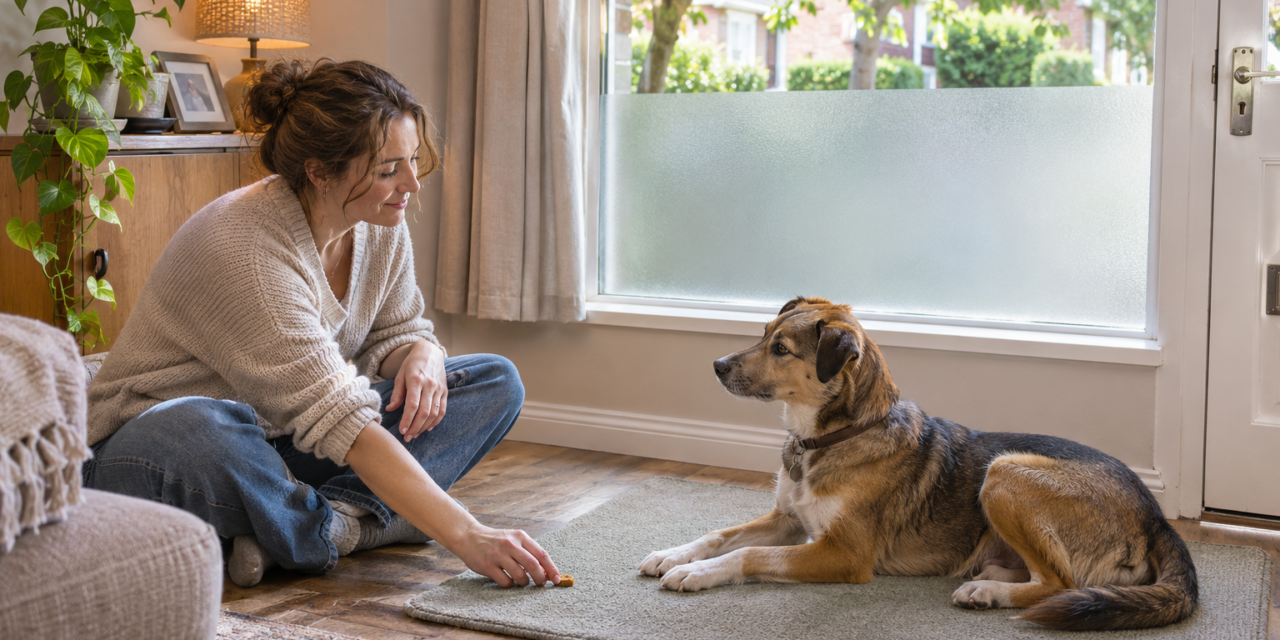
Begin when the street is quiet. Stand a few steps from the mat with your dog free to move. When they glance toward the mat or step toward it, say a short marker word such as “yes” and deliver a small reward on the mat. Repeat a few times and take a break while the dog is still interested. If they already know a mat cue, practice it in this room first with the curtains closed.
Once they are choosing the mat easily, say “mat” just before they start moving there. Build the habit from different places in the room. Reward a voluntary head turn away from the glass or a check-in with you, even if the dog only moves a step at first. When a dog is already rigid and staring, a cue they know well can be too difficult to follow. Close the view or increase the distance, let them recover, and make the next practice easier.
Teach the release as well. After a few quiet seconds, use your usual release word and allow the dog to leave. Gradually give an occasional small reward for staying relaxed. Add duration or distance in separate steps. A dog who can settle while you sit on the couch may still need an easier repetition when you walk toward the front door. If they repeatedly leave before the release, shorten the exercise and reward sooner on the next attempt.
Practice with a trigger your dog can handle
Ask someone your dog is comfortable with to walk past at a distance or use a naturally quiet part of the day. Keep most of the window covered and position your dog far enough back to respond to you. When they notice the movement and can still take food comfortably, offer a small reward away from the glass. If they choose to turn toward you or step toward the mat, reward that choice too. A single calm pass can be enough for one session.
Change one feature at a time. Let the person pass a little closer, uncover a little more glass, or practice at a slightly busier time. Leave the other conditions easy. If the dog starts lunging, barking in a long burst, or refusing a reward they normally want, put the cover back and take a break. The next session can start farther from the window. Repeated exposure at full intensity can leave you with a dog who reacts sooner the next time.
Set up the room for the days you cannot train. If you are taking a work call when deliveries normally arrive, close the view beforehand and give the dog access to their usual quiet spot. If a visitor is expected, settle the dog away from the door before the knock. Planned practice can be brief. Management carries the rest of the day.
Measure recovery as well as frequency
Pick a recurring trigger, such as the neighbor walking to the mailbox. Record whether your dog noticed it, whether they could look back at you, and roughly how long it took them to return to what they were doing. Compare several similar occasions rather than a quiet Sunday with a busy weekday. One bark followed by a voluntary return to the mat can be useful progress, even if the dog still notices every passerby.
Look for relaxed behavior too. A dog who can sniff, shift position, and lie back down is giving you better information than a dog who has become silent while remaining stiff and watchful. If you have a setback, ask what changed. A closer visitor, another dog on the sidewalk, or a second trigger before the dog recovered can all make a familiar exercise harder. Restore the easier setup for a few sessions and build from there.
Know when to ask for help
Bring sudden changes in barking to your veterinarian, especially when they occur alongside changes in sleep, movement, appetite, or responsiveness. Seek help sooner if your dog injures themselves at the window, redirects toward people or other animals, or shows sustained distress when left alone. Share your observations and any short recordings that show ordinary behavior without provoking another episode. A veterinarian can check for contributing health problems and refer you to a qualified professional who uses rewards.
If you are shopping because the barking is affecting daily life, identify the moment you want to change first. A blocked sightline can help a dog who reacts to movement. A quieter room may be more useful for one who reacts to sound. Our comparison of bark collars explains which outputs the devices use and what their counters can tell you.