The-Hunting-Dog is supported by its audience. We may receive commissions on purchases made from links on our site.
Finding a torn crate pad is frustrating, but the first question is whether your dog is safe. Missing fabric, foam or filling changes the problem from replacing a bed to checking for possible swallowing. Once that immediate concern is addressed, look at when the damage happens, how the bedding fits and whether your dog is comfortable in the crate. A stronger cover can change what a dog can grab; it cannot make an unsuitable setup comfortable or teach a worried dog to relax.
This guide focuses on introducing and managing crate bedding. For the differences between flexible mats, foam mattresses and framed sleeping surfaces, see our crate-pad and chew-resistance comparison.
Start with the damaged pad, not another purchase
Move your dog to a safe supervised area before inspecting the bed. Look at both sides, the seams, fastening points and any zipper. Photograph the damage and keep the pad out of reach. Compare the remaining material with what you can find around the crate. A missing corner is not proof that it was swallowed, but finding a few scraps does not establish that everything is accounted for.
If you saw your dog swallow bedding, or material is missing and ingestion is possible, call your veterinarian promptly for advice. Vomiting, reduced appetite, lethargy or abdominal pain make veterinary assessment particularly urgent. Do not wait for every sign to appear, try a home remedy to push material through, or make your dog vomit unless a veterinarian specifically directs you. Explain what the pad contained and roughly when the chewing happened.
Do not patch a torn cover and return it for another unsupervised trial. An exposed opening gives teeth access to the inside. Put damaged bedding aside until it can be replaced or repaired according to the maker’s instructions, then reassess whether that design suits your dog at all.
Separate scratching, chewing and distress
Brief scratching before lying down is different from repeatedly working at one seam. Notice the sequence: does your dog circle and settle, lift a corner and gnaw, carry the mat around, or attack bedding while trying to leave? Write down what you actually see rather than labeling every torn bed as boredom or separation anxiety.
A short observation log can be useful. Record the time, whether someone was nearby, what happened before crating, how quickly the dog settled and where damage began. For example, a pad may remain untouched during an open-door nap but get pulled up whenever the door closes. That pattern is more useful for planning the next session than the number of beds already replaced.
Frantic escape attempts, persistent vocalizing, heavy panting or drooling warrant a different plan from ordinary bedding wear. The ASPCA explains that confinement can increase distress for some dogs. Speak with your veterinarian and a suitably qualified behavior professional; a tougher pad is not a treatment for fear.
Check the whole sleeping space
Measure the usable floor inside the crate with the normal tray installed. Note narrow points, rounded tray corners and anything that reduces the space. Compare those measurements with the actual bed dimensions, rather than matching two products that both say “42-inch.” A mat that buckles up a wall leaves a tempting edge to pick up. One that slides around may also be harder for a dog to settle on.
Check height as well as length and width. A thick foam mattress or raised cot uses some of the dog’s standing room. Watch your dog enter, turn and stand naturally with the bedding in place. The doorway must remain usable, and rigid corners must not press against the door or latch. For a metal-framed bed, confirm the frame can pass through the opening before choosing a size.
Look at temperature and location without assuming that more padding is always better. Keep the crate away from direct sun, heaters and drafts. Choose a quiet position where ordinary household movement will not continually interrupt rest. A bed should improve a suitable resting space, not compensate for a crate that is too small.
Choose construction for the behavior you observed
A flexible mat is easy to carry and wash, but a dog can lift or bunch it. Foam adds a thicker cushion, while also putting foam behind a cover that must remain intact. A framed bed protects the fabric edge differently and may reduce easy purchase at the corners. An unpadded cot removes loose filling from the design, but its fabric can still be damaged and its raised surface must suit the dog.
Read limitations as carefully as the word “tough.” Digging resistance is not the same as resistance to persistent biting. Water-resistant fabric does not mean a complete bed can stay soaked. A replacement promise is a purchasing term, not permission to leave a dog chewing damaged bedding. Keep the care instructions and check the applicable seller’s warranty conditions before ordering.
A framed padded option from our comparison
The K9 Ballistics Armored Padded Dog Crate Bed, Large in Obsidian Black Ripstop uses an aluminum frame around a padded fabric center. The exact variant in our guide is B0FHS4FGS8, with a 41 × 27-inch frame footprint. Its edge protection makes it a different proposition from a loose fabric mat, while the padded center provides a cushioned surface.

View the Armored Padded Crate Bed on Amazon →
The important limitation is fit: the frame is rigid, so it cannot squeeze into a smaller tray or doorway. Optional legs also change the room available above the bed. The manufacturer describes this design for wire crates; do not assume it fits a plastic carrier or another heavy-duty crate. Check the actual interior and installation route, and continue supervising early use.
Introduce bedding with the door open
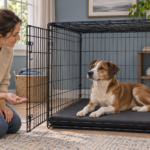
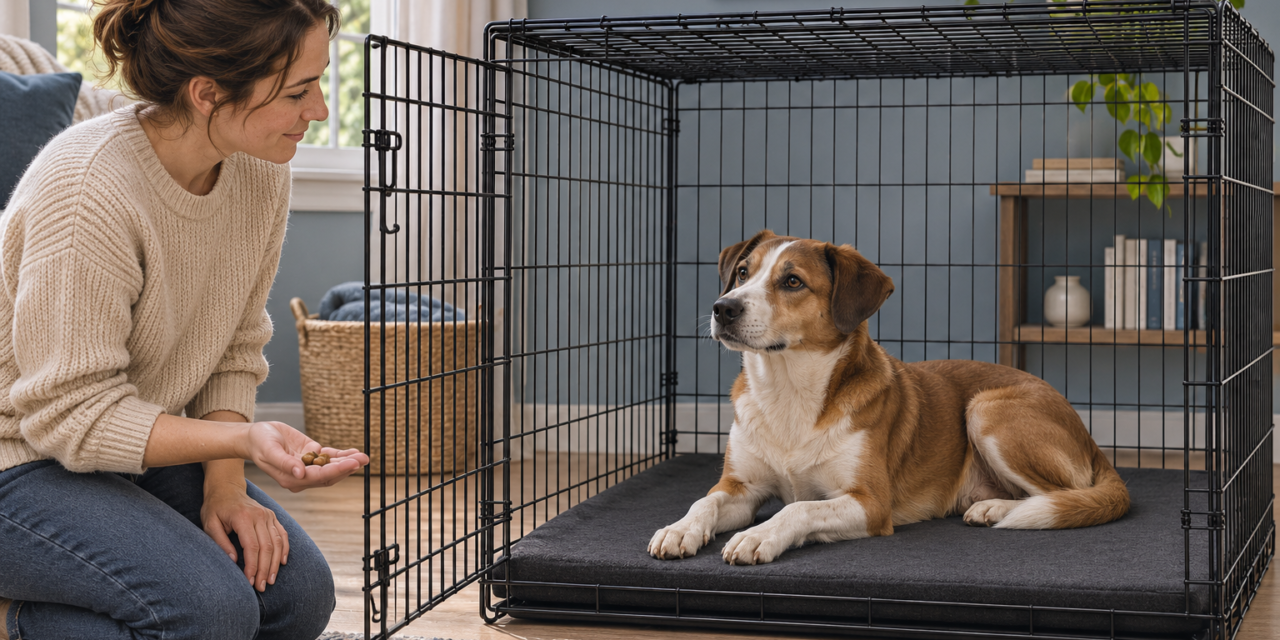
Choose a time when your dog’s basic needs have been met and the house is calm. Put the intact bed in place and leave the door open. Let your dog investigate voluntarily. Reward a comfortable step onto the surface, then allow an easy exit. Avoid pushing the dog inside or closing the door as soon as they enter.
Begin with an achievable pause rather than aiming for a complete nap. A dog who stands on the mat, turns around and walks out calmly has still practiced using the new surface. Build toward sitting or lying down when those movements happen comfortably. Place a small reward where the dog can reach it easily without encouraging them to dig into seams for dropped food.
End while the session is going well. Several calm visits are more informative than one long attempt that finishes with chewing. If your dog starts picking at the bedding, calmly interrupt and give them space to leave. Review the fit, material and difficulty before trying again; do not turn the mat into a tug game.
Add duration and door movement separately
Once open-door use looks comfortable, change one thing at a time. You might first stay beside the crate while the dog rests for a little longer. On a separate easy repetition, move the door slightly and reopen it. Later, practice a brief closure while you remain nearby, returning to an easier step if the dog becomes worried.
Do not treat a calm supervised session as proof that a long absence will be equally comfortable. A camera can help you observe what happens when you step away, but it cannot remove a damaged mat or provide immediate help on its own. Arrange early trials so you can respond promptly. Increase difficulty according to the dog’s behavior, without a fixed timetable that every dog must meet.
If chewing appears only after you leave, reduce that challenge rather than repeatedly rehearsing damage. Ask for professional help with the pattern you recorded. Where a crate is causing distress, discuss a suitable alternative resting area instead of simply buying a stronger enclosure or leaving the dog to struggle.
Make inspection and cleaning part of the routine
Before each use, run your eyes over the edges and underside. Check for loose threads, opening seams, exposed filling, damaged corners and a displaced cover. Follow the instructions for any supplied anchors; do not improvise dangling cords or attach a mat to your dog. Remove damaged bedding promptly.
Clean each component as directed. “Machine-washable cover” does not mean the foam core belongs in the washer. A framed pad may require disassembly before its center can be washed. Let every part dry fully before reassembly, then check that covers and fastenings sit correctly. Keep a simple record of recurring weak points so the next purchase addresses the actual problem.
The aim is an intact surface your dog can use comfortably and calmly. Progress might mean resting on a correctly fitted mat, accepting a different construction, or changing the confinement plan with professional guidance. Count comfortable behavior and safe equipment as success, rather than asking a bed to survive chewing indefinitely.