The-Hunting-Dog is supported by its audience. We may receive commissions on purchases made from links on our site.
A dog getting out of a crate can leave you looking for a stronger lock before you have worked out what happened. Pause first. A door left partly latched, a crate that is too small and a dog panicking about being alone call for different responses. The useful goal is comfortable, safe confinement when appropriate, rather than proving that your dog cannot defeat a new enclosure.
Start by checking your dog and the equipment, then look at the circumstances around the attempt. If you are comparing construction after those checks, our heavy-duty dog crate guide explains seven designs and their limits, including folding models that are unsuitable for destructive escape behavior.
1. Make the immediate situation safe
Move your dog to a secure, supervised area away from the damaged crate. Close exterior doors and separate other pets before inspecting anything. Avoid reaching through a damaged panel or pulling a frightened dog toward you. If a body part is trapped, seek veterinary or emergency assistance instead of forcing it free.
Look for bleeding, damaged nails, limping, trouble opening the mouth or a tooth that looks broken. Contact your veterinarian promptly after a forceful escape attempt if you suspect injury. A dog walking around afterward has not necessarily escaped without harm. Keep the damaged enclosure out of use while you decide what to do next.
Photograph the latch position, bent areas and floor before moving parts around. This gives the manufacturer or your veterinarian something concrete to assess. Store loose screws or broken pieces out of reach. A few clear photographs are more useful than repeating the trial to capture a better video.
2. Separate an equipment failure from the dog’s response
With the dog elsewhere, check whether the door was fully shut, every required latch engaged and the panels assembled as intended. Look for missing fasteners, loose hinges, a tray out of position or damage at folding joints. Include anything you changed recently, such as taking off wheels or moving the crate to another room.
For example, a dog that stayed relaxed while a misaligned latch popped open has given you a hardware problem to investigate. A dog that first paced, drooled and repeatedly struck the door has given you a behavior and welfare concern as well. Both situations deserve attention, but replacing the latch only addresses the first part.
Do not secure a damaged door with cable ties, improvised wire or a padlock placed where the dog can reach it. These additions may create edges or snag points and leave an adult unable to open the crate quickly. Ask the manufacturer about approved parts and whether the damaged frame can safely remain in service.
3. Write down when the behavior starts
Record whether you were in the room, elsewhere in the house or outside the home. Note what happened immediately beforehand: a door closing, another dog approaching, a noise, your departure routine or the end of a meal. Include the approximate time until the first sign of difficulty and how the dog behaved afterward.
A short observation log could read: “Door open: enters and eats. Door closed with me seated beside it: stands up and scratches. I reopen and stop the session.” Another dog might settle with the same setup but become distressed when a person leaves. These observations help a professional distinguish the situations; they are not a diagnosis you need to make yourself.
If you already have a camera, use recordings from ordinary safe observation to describe the sequence. Do not leave a dog in a setup that has produced frantic attempts just to gather footage. Record early signs as well as the escape itself, and tell your veterinarian if the behavior appeared suddenly or has become more intense.
4. Check comfort and daily needs
Can your dog stand and sit naturally, turn without squeezing and lie in a comfortable position? Measure the usable interior rather than the manufacturer’s overall height with wheels. Check the doorway too. A dog should not have to force their shoulders through an entrance or remain crouched because the roof is low.
Look at the resting surface and the room. A grate can be uncomfortable for a particular dog’s paws, while a thick bed can reduce headroom. Direct sun, a nearby heater, household traffic or another pet lingering outside the door may make an otherwise reasonable location unsuitable. Keep air openings clear; covering the crate is not a way to make a struggling dog accept it.
Build the day’s plan around toilet opportunities, suitable activity, social contact and rest. A crate should not compensate for an absence that is too long for the individual dog. Arrange help when necessary rather than trying to solve a scheduling problem by buying a larger enclosure.
5. Use a temporary arrangement your dog can tolerate
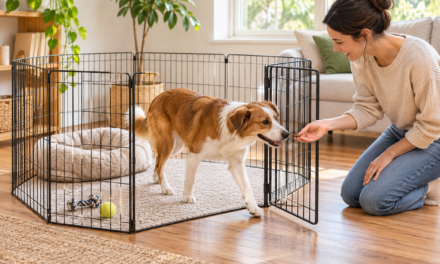
If crate confinement causes distress, consider whether a safely prepared room or gated area is more comfortable. That alternative still needs an individual assessment: some dogs also try to force gates or doors. Remove hazards, check escape routes and supervise the introduction rather than assuming a room automatically solves the problem.
For unavoidable commitments, a familiar person staying with the dog may be a more useful short-term option than another enclosure trial. Depending on the dog, a sitter or suitable daycare can help bridge the gap while you work with a professional. Choose arrangements that suit the dog’s behavior around people and other dogs.
Do not punish an escape or stage a confrontation at the crate. Crate training alone does not resolve separation-related worry. If the dog cannot settle, repeatedly leaving them to struggle can make the next session harder. Tell your veterinarian what temporary options you have and where each one is proving difficult.
6. Restart only at a comfortable level
When an appropriate plan is in place and safe equipment is ready, begin with voluntary approach and entry while the door stays open. Reward relaxed participation and let the dog move away. Place food near the entrance if reaching farther inside makes them hesitate. Progress should follow the dog’s comfort, not a timetable printed on a training checklist.
Practice door movement separately from being left alone. You might touch the door, move it slightly and then return to an easier step. Closing it briefly is a later step for a dog remaining relaxed. Add distance from you and duration gradually, changing one part at a time so you can see which change causes difficulty.
Stop and reassess if the dog begins persistent vocalizing, salivating, frantic scratching or attempts to force the enclosure. A professional can help you set smaller steps and decide whether the crate remains appropriate. Do not use “an hour without escaping” as the test of success; the dog’s behavior throughout the session matters.
When stronger equipment may be useful
A more substantial frame may be worth considering after a genuine hardware failure in a dog that otherwise rests comfortably in confinement. Choose it around usable space, reliable operation and the dog’s physical needs. Stronger metal is a construction feature, not a treatment, and a rigid crate can remain intact while a dog injures themselves against it.
One option to compare: ProSelect Empire Medium
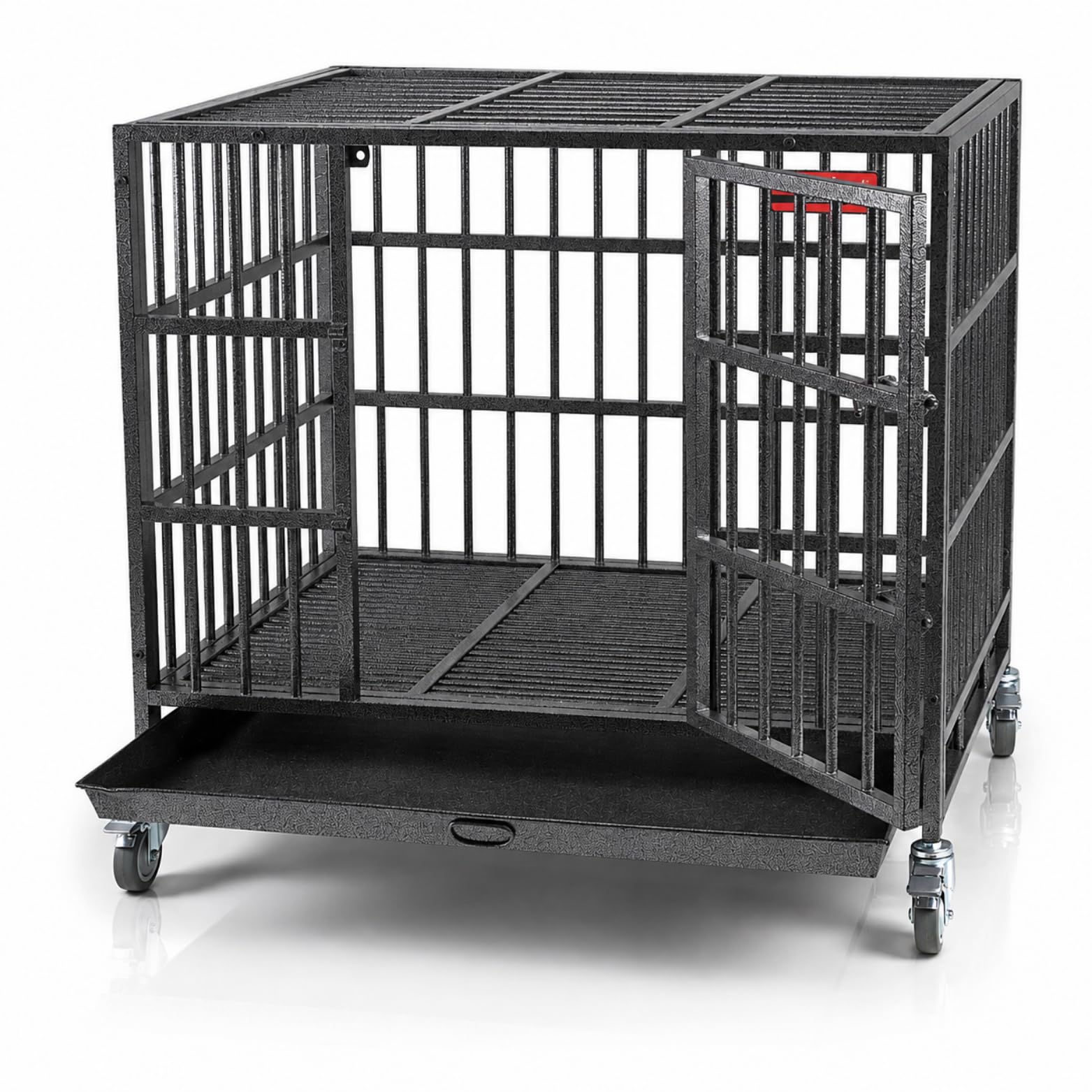
The ProSelect Empire Medium has a steel frame, two front-door latches, a removable grate and a slide-out steel tray. Its usable interior is 35¾ × 23½ × 24½ inches, so measure your dog’s comfortable posture before considering this size. The tray makes cleaning accessible, but the grated floor may not suit every dog’s paws or resting needs. Its limited warranty excludes dog-caused damage. Consider it only when the fit and confinement plan are appropriate.
What to bring to a veterinary or behavior appointment
Bring the crate measurements, photographs of damage, your observation log and any existing safe recordings. Explain the dog’s routine, the lengths of recent absences and whether the behavior also occurs behind a gate or in another room. Mention changes in health, toileting, mobility or household circumstances. Those details are more informative than describing the dog simply as stubborn or an escape artist.
Ask for a plan covering both the next necessary absence and the longer training process. Clarify which signs mean you should stop a session and whom to contact if the dog cannot tolerate the starting step. A useful plan should leave you knowing what to do tomorrow, without requiring another unsafe attempt in the meantime.