The-Hunting-Dog is supported by its audience. We may receive commissions on purchases made from links on our site.
Two dog-food bags can look almost identical at the front and describe very different meals at the back. One may be intended for adult maintenance, another for growth; a lamb-named recipe can also contain chicken. Reading the same small group of label details in a consistent order makes comparison easier than starting with a long list of marketing claims.
This checklist helps you organize that comparison. It does not prescribe a diet for a dog with a health condition. For examples of how similar names can hide different ingredients and formats, see our Nutrish dog food comparison.
Start with the exact food you are comparing
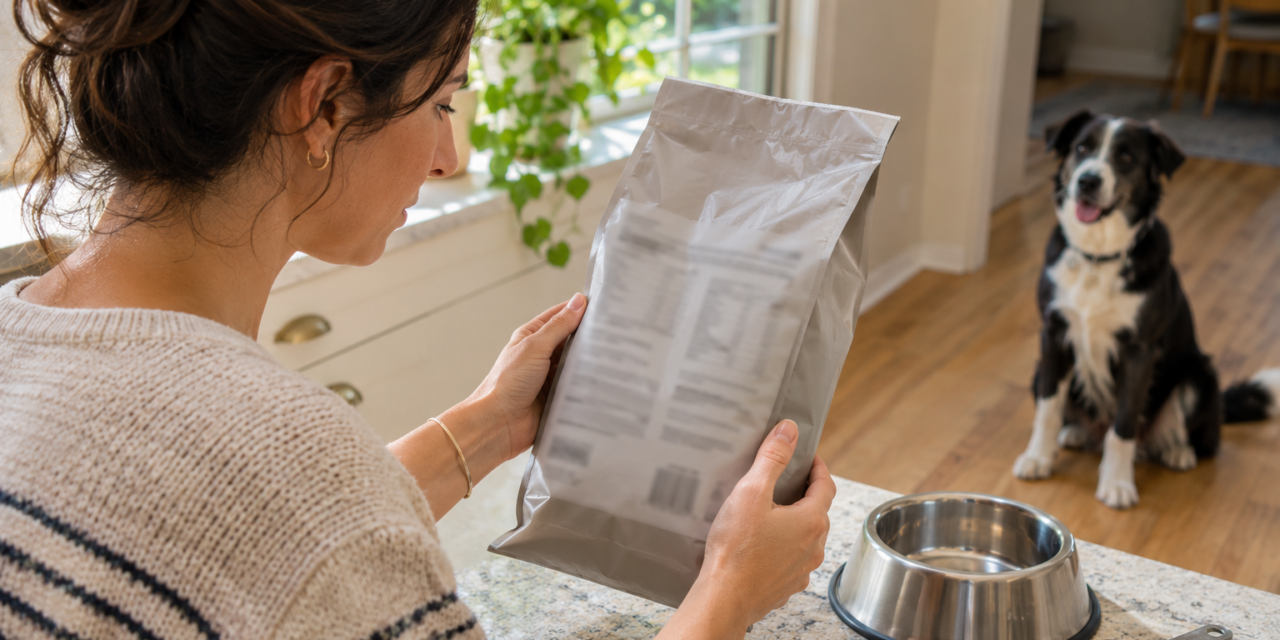
Write down the full recipe name, whether it is dry or wet, and the package size. Save photographs of the front, ingredient panel, nutritional statement and feeding directions. A picture of the front alone will not answer most of the important questions, particularly if the online listing groups several sizes or recipes together.
Compare one specific recipe with another. A variety pack needs an entry for each flavor when the ingredients or feeding information differ. Likewise, do not assume a large-breed, puppy or grain-free version shares the same formula as another food carrying the brand name. Keep your notes attached to the food, rather than to an entire brand.
1. Find the nutritional adequacy statement
Look for the statement describing the species and life stage the food is intended to support. Adult maintenance is different from growth or reproduction. If you are choosing food for a large-breed puppy, the growth statement and its large-size-dog wording matter; a retailer’s general “all ages” filter is not enough to settle that question.
A complete-and-balanced statement identifies a food intended to provide the required nutrition when fed appropriately for its stated purpose. A product intended only for intermittent or supplemental feeding has a different role. Check this before deciding that a food with an appealing flavor or ingredient list should become the whole diet.
Also distinguish the evidence described in the statement. Formulation to an AAFCO nutrient profile and feeding tests using AAFCO procedures are different routes to supporting adequacy. Neither means that AAFCO has approved a brand or endorsed an individual food.
2. Read the ingredients without turning them into a score
Ingredients are listed in descending order by weight. Start by identifying the named animal ingredients, grains or other carbohydrate sources, fats and ingredients your dog specifically needs to avoid. Then continue past the first item. A beef-first food may also include chicken meal, soybean meal or chicken fat.
Ingredient order does not tell you the exact percentage of every ingredient, how well the final food is digested or whether the manufacturer has strong quality control. Fresh meat and dried ingredients also contain different amounts of water, so their positions alone cannot establish which finished food supplies more useful nutrition.
Use the list to answer concrete questions rather than to award points for attractive words. “Does this recipe contain chicken?” is answerable. “Is every ingredient near the top automatically superior?” is not a sound way to judge a complete diet.
3. Understand the guaranteed analysis
The familiar panel usually gives minimum crude protein and fat and maximum crude fiber and moisture. Those are guarantees, not a complete account of the food’s average composition. Two products with the same minimum protein guarantee do not necessarily have identical actual protein levels.
The panel also does not establish protein quality, digestibility or suitability for a particular medical problem. If your veterinarian needs a precise nutrient value, ask the manufacturer for an average or typical analysis, including the units used. Do not try to calculate an exact carbohydrate percentage from an incomplete panel.
A moisture example: imagine a dry food labeled 24% minimum protein and 10% maximum moisture. Using those label figures, the dry-matter estimate is 24 ÷ 90 × 100, or about 26.7%. A hypothetical wet food with 8% protein and 78% moisture gives 8 ÷ 22 × 100, or about 36.4%.
These are invented examples to show the calculation, not the analyses of products reviewed here. They explain why comparing the printed 24% and 8% directly is misleading. They do not prove that the wet food is nutritionally better, and guarantees do not become exact average measurements through calculation.
4. Compare calories separately from percentages
Find the calorie statement, commonly expressed as kilocalories per kilogram and per cup, can or tub. Use the same unit on both sides of a comparison. A scoopful is not automatically the same amount of energy in every food, even when the scoop looks full in each case.
For example, a hypothetical cup providing 450 calories supplies 25% more energy than a cup providing 360 calories. Replacing one with the other cup for cup can therefore change the meal substantially. This is a comparison example, not a daily calorie target for your dog.
When combining dry and wet food, count both components. Treats and other extras belong in the overall plan too. Use the feeding directions as a starting point and discuss an appropriate total with your veterinary team, particularly during growth, weight management or illness.
A worked ingredient check: Nutrish Beef, Pea & Brown Rice

The 28-pound bag in our comparison is a dry food marketed for adult dogs. Beef is first, but the ingredient list also includes beef meal, soybean meal, corn, grain sorghum, peas and chicken fat. It is therefore neither beef-only nor free of soy, corn or chicken-derived ingredients.
The manufacturer identifies this recipe for adult maintenance. That makes it a useful example of why the full nutritional statement and ingredient list matter more than the short flavor name. It is an option to compare for a suitable adult dog, not a way to diagnose an allergy or select food for every life stage.
5. Translate front-of-pack claims into specific questions
“Grain-free” tells you about a category of ingredients. It does not tell you whether the food contains chicken, whether it meets your dog’s nutritional needs or whether it will resolve a suspected allergy. “Limited ingredient” also needs a closer look: the full list can include several animal sources and added vitamins and minerals.
For a suspected food allergy, do not start a diagnostic trial simply by choosing a retail bag with fewer ingredients. Your veterinarian can select an appropriate controlled diet and explain what else must be excluded during the trial. Cross-contact and unlisted exposures can make an informal experiment difficult to interpret.
Other claims may be comparative. If a bag says it has more protein, look for the named comparison food and the actual guaranteed analysis. A relative increase is not the same thing as the final percentage, and a higher number alone does not settle which food is appropriate.
6. Ask questions the label cannot answer
Useful questions for a manufacturer include who formulates the food, what nutritional expertise supports the recipe and how quality control is handled. Ask whether the food is made by the company or produced for it elsewhere. These questions provide context that attractive ingredient wording cannot supply.
If you need a nutrient figure beyond the panel, identify the exact recipe and ask for a typical analysis in a useful unit. Keep the company’s reply with your notes. A general customer-service statement about the whole brand does not replace recipe-specific information.
Make a short comparison you can actually use
For each food, record five things: exact recipe, nutritional purpose, relevant ingredients, calorie unit and the practical serving format. Add any question that remains unanswered. This leaves you with a focused comparison to discuss rather than a collection of claims that sound reassuring but cannot be matched directly.
Before opening a replacement bag, compare its label with your saved photographs. Keep the package’s lot and date information while using the food, and follow its storage directions. If your dog needs a diet change because of symptoms or a medical diagnosis, bring the label details to your veterinarian rather than trying to solve the problem through marketing terms.