As an Amazon Associate, we earn from qualifying purchases.
Your dog walks around the new elevated bed, sniffs it, then chooses the floor. That does not mean the bed is useless. A raised frame and a fabric surface that moves underfoot can feel unfamiliar. Give your dog a chance to investigate before expecting a full afternoon nap.
The aim is a resting place your dog chooses comfortably. Work in small steps, keep another suitable place to rest available, and separate learning a bed cue from learning to cope alone. If you are still choosing a construction, our indestructible dog bed buying guide compares soft pillows and protected-frame cots, including their chewing limits.
First, decide whether the bed fits your dog
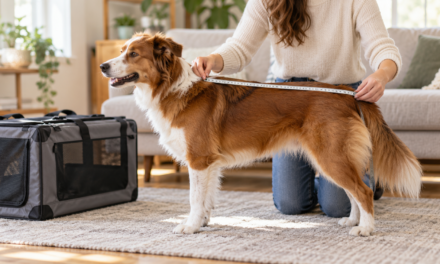
Watch your dog sleeping before measuring. A dog who curls into a ball at first may stretch out later. Compare the space occupied in both positions with the usable fabric area, rather than assuming the whole outside frame is sleeping space. Your dog needs room to turn around without balancing on a rail.
Look at access too. A bed may support a dog’s weight yet still be too high to step onto comfortably. Slipping, repeated aborted attempts, stiffness or reluctance to get up deserve attention. Do not treat a painful movement problem as stubbornness or keep tempting the dog into an awkward jump. Ask your veterinarian about a comfortable resting arrangement if movement appears difficult.
Think about where the cot will live. A large frame squeezed between furniture can leave only one narrow approach. Before training, make space for the dog to approach, turn and step off without bumping a chair. An easy exit makes investigating less of a commitment.
Prepare a steady, quiet place
Assemble the bed completely, following the model’s instructions, and check the fasteners, fabric and feet. Put it on a level surface. Press the corners gently with your hand before inviting the dog over; rocking or sliding gives you something practical to fix first. Keep fingers clear of moving joints.
Choose a familiar room away from a busy doorway. Give children and other pets their own activity elsewhere for the first session. A dog should be able to concentrate on one new surface without another dog competing for every reward. Leave enough space for you to sit beside the bed without blocking the route off.
Have a few small food rewards ready and count them within the dog’s normal food allowance. Use food the dog already tolerates. Put a spare chair nearby if you need somewhere to sit, so you do not keep standing up and looming over a hesitant dog.
Reward investigation before asking for a lie-down
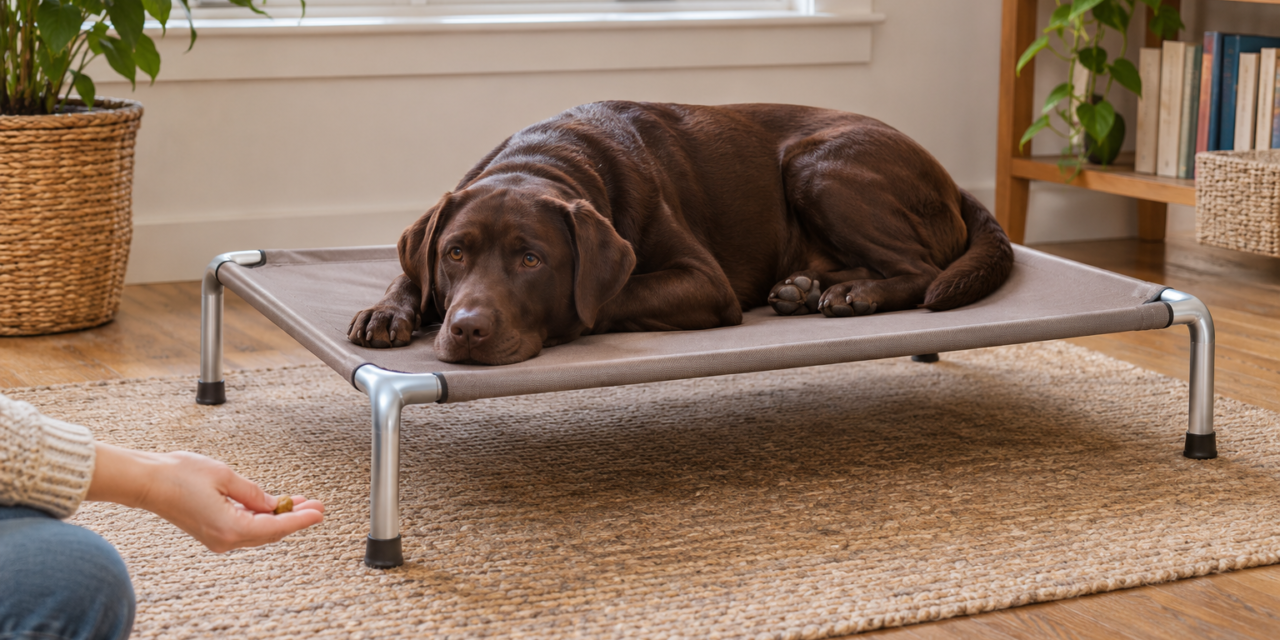
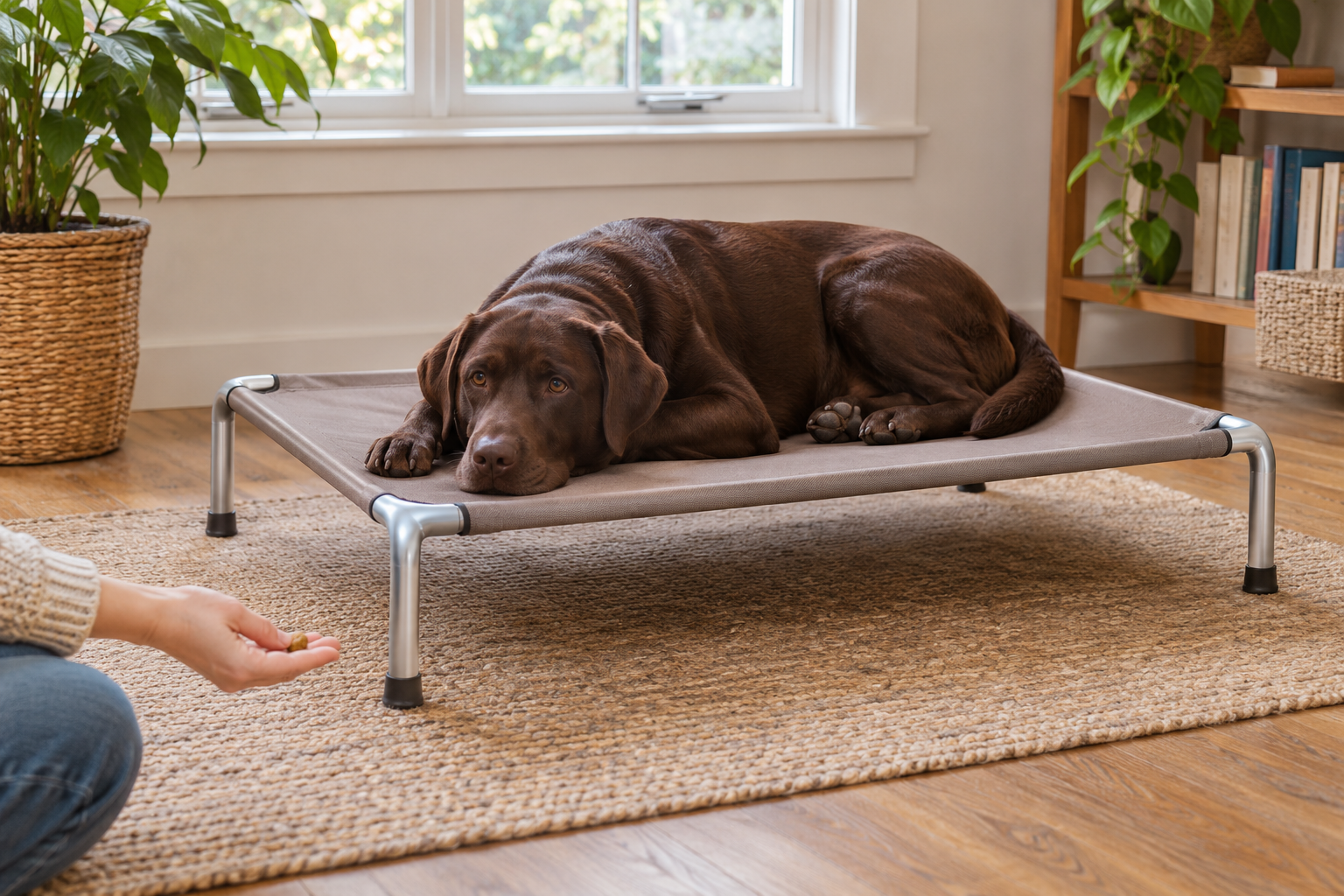
Let your dog notice the bed. Reward a voluntary look, approach or sniff, then pause. You are looking for curiosity, not pulling the dog toward the frame by a collar or holding food so far away that the dog has to scramble. Keep the bed accessible between attempts.
For example, if your dog happily walks to the near corner but stops there, reward that approach. On a later attempt, a reward placed just onto the accessible surface may encourage a paw. If the dog stretches forward with the back feet planted and then retreats, bring the next task closer rather than moving the food farther away.
Keep each practice short enough that the dog remains interested. A few relaxed approaches are useful progress. End with an easy success and allow the dog to rest elsewhere. Repeating the same invitation while the dog becomes more worried does not make the surface feel safer.
Build from paws on the bed to relaxed resting
Once stepping on is easy, reward the dog for standing with all four feet on the fabric. Let the dog step off again. That simple return to the floor is part of learning how the surface feels, especially when the sling flexes under a shifting body.
If your dog already knows a comfortable down cue, you can try it once after the dog is confidently on the bed. Otherwise, wait for a voluntary sit or lie-down and reward that. Keep rewards low and easy to reach so the dog does not have to spring up to take them.
Notice more than the position of the paws. A dog standing rigidly and staring at your hand is doing something different from a dog resting a hip and letting the head drop. The first may be ready for another easy repetition; the second gives you a chance to reward quiet resting without creating excitement.
A practical example: the Kuranda aluminum cot
Kuranda Silver Aluminum — XX-Large, Smoke Cordura

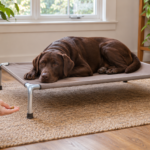
The Kuranda variant in the buying guide is the 50 × 36-inch Silver Aluminum bed with Smoke Cordura nylon, ASIN B004E2GBNK. It has an unpadded suspended surface, and the listing gives an 8-inch height. Its frame is rated to 250 pounds, but that rating does not tell you whether your dog can step up easily or likes a taut sleeping surface.
Kuranda’s own introduction advice includes temporarily removing all the legs while a hesitant dog gets used to the surface, then refitting them once the dog is comfortable. This is advice for its bed, not permission to remove legs from every cot. Some suspended beds require their legs for support. Keep the frame stable and follow the instructions for the product you own.
The useful feature here is a protected fabric edge without a stuffed mattress to pull apart. The limitation is that the firm, raised design may take acclimation and still may not suit your dog. Optional soft accessories are not chew proof; they are a poor shortcut for a dog who swallows fabric.
Add time before adding household distractions
When your dog lies down readily, leave a slightly longer pause before the next reward. Build gradually rather than jumping from a quick lie-down to staying through an entire meal. Keep your own movements predictable while the dog learns that remaining settled is worthwhile.
Change one part of the exercise at a time. First sit nearby for a little longer. Later, stand up and sit down again. On another repetition, take one step away. If you simultaneously cross the room, open the front door and stop rewarding, it is difficult to tell which change was too much.
A simple note helps: record the location, what you did and the dog’s response. “Rested while I stood up” tells you more than “good session.” “Got off when the dishwasher opened” gives you a small, specific distraction to make easier next time. These are observations, not a deadline your dog has to meet.
Troubleshoot the reason your dog leaves
If the dog steps off when the bed shifts, recheck its position and fittings. If the dog avoids only one side, inspect the approach for slippery flooring or a tight gap. If the dog gets on willingly but immediately curls beside the cot, consider temperature, surface feel and whether the bed offers enough usable room.
Try moving the bed once to a calmer familiar spot, then give that arrangement time. Constantly changing its location, covering and rewards can make it harder to identify what helps. Keep a comfortable alternative available instead of making access to rest depend on completing a training exercise.
If the dog starts biting the sling, stop the session calmly and prevent access to damaged material. Do not turn pulling fabric into a tug game. A protected perimeter can reduce opportunities to grab edges, but it cannot teach relaxation or resolve separation distress. If bedding is missing and may have been swallowed, contact a veterinarian promptly.
Keep the bed useful after the first successful nap
Place occasional rewards on the bed when your dog chooses to rest there, and let the dog leave without a confrontation. Introduce a simple cue such as “bed” once approaching it is familiar, rather than repeating the word while the dog has no idea what it means.
Check the sling, corners and fasteners during cleaning. Remove damaged bedding from use. Wash or rinse only the parts the manufacturer allows, and dry the surface before inviting the dog back. A familiar resting place still needs routine care.
Finally, keep settling practice separate from departures. A dog who can nap beside you on a cot may still struggle when left alone. Pacing, vocalizing or frantic destruction around departures calls for a different assessment. The bed is one part of a comfortable home, and success means relaxed voluntary use, not simply keeping a dog on a platform.