
As an Amazon Associate, we earn from qualifying purchases.
Your dog gets up slowly after a nap, then seems brighter halfway through the walk. Was today better, or did you simply take a shorter route? A mobility diary makes those everyday details easier to compare. It also gives your veterinarian something more useful than a hopeful impression when you discuss a joint supplement.
Start with an examination and a clear question
Stiffness does not tell you which joint hurts or what caused the problem. Arthritis is one possibility, but an injury or another illness may also change how a dog moves. Arrange a veterinary assessment rather than using a bottle of chews to diagnose the problem. Tell the clinic when the change began, whether it appeared suddenly, and which activities your dog now avoids.
A diary should help answer a practical question: can your dog rise from their usual bed more comfortably, finish a familiar outing, or settle after exercise? It cannot show that cartilage has regrown. If your dog suddenly cannot stand, will not put weight on a leg, or appears severely distressed, contact a veterinarian promptly instead of waiting to collect more entries.
Choose three ordinary activities to observe
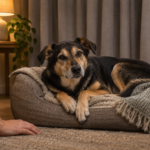
Pick activities that already happen in your dog’s day and that your veterinarian considers appropriate. Useful examples are getting up from a bed, walking to the usual bathroom spot, and lying down again after a short outing. Choose activities you can observe without prompting your dog to perform for the notebook. Avoid making stair climbing or jumping a daily test when those movements already look uncomfortable.
Write down exactly what you mean by each activity. “Morning rise” could mean the first time your dog gets up after overnight sleep. “Short walk” could mean the same flat path to the corner and back. Consistent descriptions help another family member record something comparable. If one person watches the dog after breakfast and another watches after a long afternoon nap, label those as different observations.
Make a small, useful baseline
Before adding a supplement, record several ordinary days if your veterinarian says that is appropriate. Do not postpone pain relief or another recommended treatment to create a cleaner baseline. If treatment needs to begin immediately, begin the diary that day and note what changed. Your dog’s comfort takes priority over making the record resemble an experiment.
Use words you will still understand a month later. Instead of “bad legs,” write “paused twice while rising from bed; walked to the door without stopping.” Instead of “good walk,” write “completed the usual route; turned toward home at the final corner.” These descriptions preserve the detail without pretending that a homemade scoring system is a validated medical assessment. If the clinic supplies a questionnaire, use its instructions and scoring rules.
Keep each daily entry short
A notebook, a phone note, or a shared document is sufficient. Create one entry each day with the date, the three chosen activities, the supplement amount actually given, prescribed medicines, and anything unusual. Also note missed servings, vomiting, loose stool, appetite changes, or a reluctance to take the product. Record what happened rather than filling a blank with what you intended to give.
For example: “Tuesday: rose from bed with one pause; completed the flat bathroom route; settled within a few minutes afterward. Supplement given with breakfast as agreed. Rain meant no evening outing.” That last sentence matters: an easier evening may reflect less activity. Keep notes brief enough that you can maintain them on busy days. A simple factual entry is more useful than a detailed record abandoned after the weekend.
Use video without turning movement into a challenge
Ask the veterinary team which movements would be useful to film. A short clip of your dog naturally getting up or walking across a familiar nonslip surface may reveal changes that are hard to describe. Keep a similar camera position and include the whole dog. Note the date and whether the clip was taken before or after the usual outing. Save the original recording so the clinic can see the complete movement.
Do not repeatedly call your dog up from rest, lure them onto stairs, or ask for a jump to get a matching shot. If a safe opportunity does not arise, skip that day’s clip. A video is useful context for an examination, not a reason to provoke pain. Ask how the clinic would like files shared before sending a large collection; two relevant clips with dates may be easier to review than twenty unlabeled ones.
Agree on the supplement and review point
Glucosamine and chondroitin are common joint-supplement ingredients, but their popularity does not establish pain relief. A systematic review of clinical trials found no convincing analgesic benefit for this category in canine and feline osteoarthritis. Treat a proposed supplement as something to discuss within an overall care plan. Do not replace prescribed medication or assume that a dog who swallows a chew has received effective pain treatment.
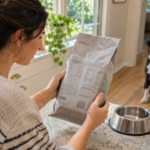
Before starting, agree with your veterinarian on the exact product, amount, and date for reassessment. Photograph the product name and ingredient panel for your records. The bottle’s suggested introductory period is a feeding instruction, not a promise that your dog will improve by that date. If the dog worsens, contact the clinic sooner. There is no need to finish an entire container before reporting a concern.
A tablet example: Cosequin Plus MSM, 132 count
Cosequin Plus MSM chewable tablets provide a concrete example of why the exact version matters. The 132-count bottle contains tablets rather than soft chews. Each tablet lists 600 mg glucosamine hydrochloride, 300 mg sodium chondroitin sulfate, and 250 mg MSM. The manufacturer’s directions distinguish an initial period from maintenance, with different amounts for different weight bands. Ask your veterinarian which schedule, if any, fits your dog.

This format makes the number of tablets given straightforward to record. Its limitation is equally clear: it is a supplement, and a measured serving does not demonstrate that it relieves arthritis pain. Record the actual administration and your dog’s everyday function separately.
For differences between tablets, soft chews, and a measured liquid, see our glucosamine supplement comparison for dogs. Take the name of the exact formula to the clinic rather than choosing by bottle size alone.
Record other changes that could affect the result
New rugs, shorter outings, a different bed, weight-management changes, rehabilitation, and prescribed medicines may all coincide with starting a supplement. Record the date of each change. Do not withhold helpful care to isolate one product. The point is to give your veterinarian enough context to interpret your dog’s progress, not to prove that a particular purchase deserves credit.
Keep the observation routine familiar while following the care plan. For instance, if a runner now covers the slippery hallway, note that getting up and reaching the door happen on a different surface. If a houseguest takes the dog on a longer walk, write it down. If you miss a day, leave an honest gap. Reconstructing several days from memory can turn a useful diary into a story shaped by the latest good or bad afternoon.
Use the diary to make the next appointment specific
Before the review, choose a few entries that show the pattern. Summarize whether each chosen activity seems easier, unchanged, or harder, and bring any concerns about tolerance or administration. Include one early video and one recent video if you have comparable clips. Ask whether the current plan is achieving the agreed comfort goals and whether the supplement remains worth continuing.
A useful discussion might be: “Getting up seems easier, but she still turns back on the same route. We added rugs and changed medication during the second week. What should we adjust?” That tells the clinician more than “the supplement works.” Improvement after several changes does not establish which one helped, and a diary cannot rule out another problem. It can help you and the veterinary team make a better-informed next decision.
Keep administration and storage safe
Give one person responsibility for checking off each serving so two family members do not both administer it. Keep the container closed in a cupboard the dog cannot reach. Flavored joint products can be attractive enough for a dog to eat an entire supply. If you suspect an overdose or an adverse reaction, call your veterinarian or an emergency veterinary service immediately and have the package available. Do not assume that a nonprescription supplement can only cause a mild stomach upset.
Bring the full list of medicines and supplements to each review, including products your dog receives in treats. Tell the veterinarian about existing health conditions and food allergies before starting anything new. Your diary then becomes a practical record of both comfort and care: what the dog could do, what they actually received, and what needs attention next.