The Hunting Dog may earn a commission from links on this page. As an Amazon Associate, we earn from qualifying purchases.
A gate can look shut from the kitchen window and still swing open when a dog leans against it. If your dog has slipped out or you’ve just moved into a house with a fenced yard, start with the places they can reach at ground level. A walk around the fence with your dog indoors can tell you what to fix before the next yard break.
1. Start at the gate, with your dog inside
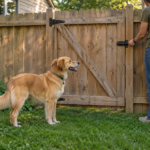
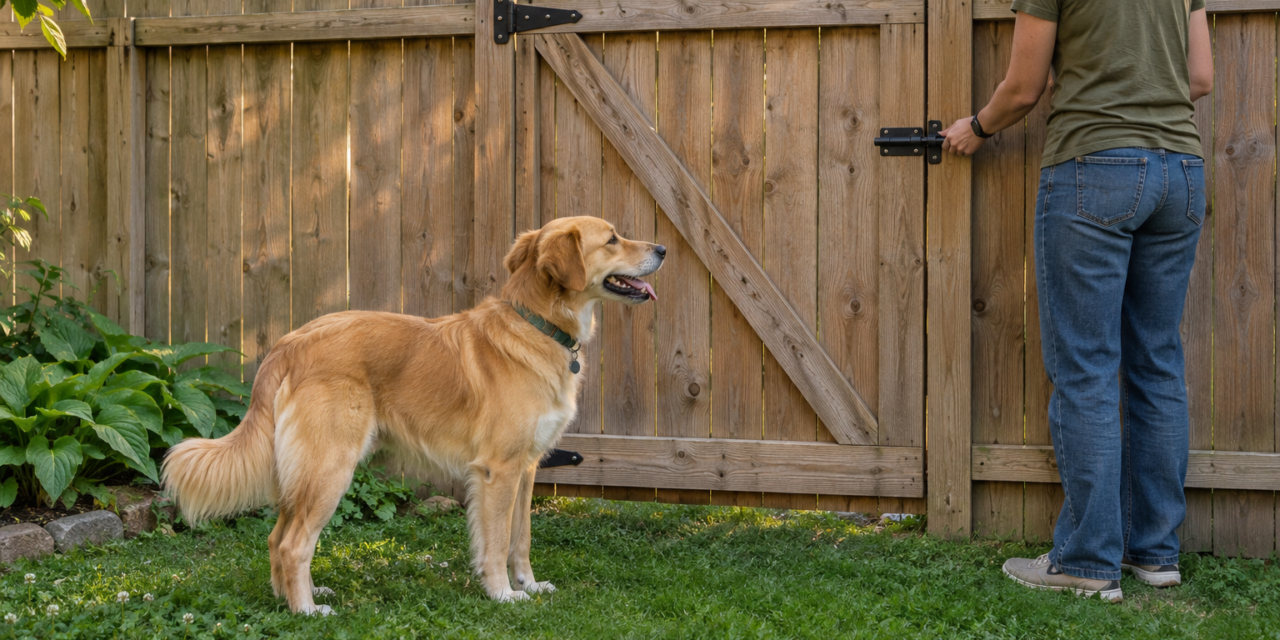
Close the gate the way you normally do, without lifting or pulling it into alignment. From inside the yard, push and pull at dog height. Then open it again and check whether the latch catches when you close it gently. If the gate needs an extra shove, hangs at an angle, or opens when you press on the bottom corner, keep the dog on leash until the hardware or gate is repaired.
Look at the hinge side, too. A gap may widen as the gate swings or as a loose post moves. Check whether a dog can reach the release with a paw or nose, and whether a child can tell that the latch has actually caught. Choose a latch that adults can operate easily. If the gate is part of a pool enclosure or emergency exit, have any repair or hardware change checked against the requirements for that gate.
Put the day-to-day rule where people will see it. Ask deliveries to stay outside the gate, and bring your dog indoors before anyone moves equipment in or out. If the lawn crew comes through on Tuesdays, make Tuesday’s first step bringing the dog inside. After the crew leaves, check the latch yourself before opening the back door.
2. Walk the fence from the dog’s side
Follow the entire perimeter. Look below each panel, behind shrubs, where the fence meets the house and where the ground slopes away. Check for fresh soil, hair caught on a board, a corner that moves when pushed, or a gap under a utility line. Photograph each spot next to a ruler and mark it on a simple sketch. You can take those measurements to a fence contractor without asking the dog to show you where it can squeeze through.
Look up after checking the bottom. A woodpile, bench, planter or retaining wall can shorten the climb by giving your dog a step. Move portable objects away from the fence. If your dog digs, note whether digging concentrates under a gate, at a shaded corner, or along the side facing an animal next door. Use a secure area while a suitable repair is arranged, and avoid loose wire or sharp improvised patches where paws or collars could catch.
After the repair, push on the panel again and check the ground from both sides when you have access. Repeat the walk after storms, landscaping, or work on a gate. Make a note of sections where soil washes out so you know where to look first after heavy rain.
3. Match your temporary setup to the way your dog gets out
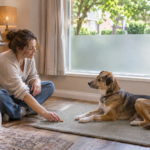
A dog who slips past a person at the gate needs a different plan from a dog who climbs the fence. For a gate dasher, leash up before opening the back door or put a closed interior door between the dog and the person handling the gate. Practice a station several feet from the gate only when it is safely shut. Reward your dog for going to the station and staying briefly, then use a release word and reward again when they turn back toward you. Build duration in small steps with the gate closed. Keep the physical separation in place during real arrivals and departures.
If your dog has dug or climbed out, take them out on a leash until the perimeter is repaired and checked. A long line attached to a well-fitted harness can give a dog room to sniff in an open part of the yard while you hold it. Pick an area away from the street, furniture and other hazards, and gather the line before walking through a doorway. A line left attached to an unattended dog can snag. Use a short leash if the yard is crowded or narrow.
Plan for the distraction that matters to your dog. A dog who chases squirrels may need morning yard breaks away from the trees where they gather. A dog who barks and rushes the fence when a neighbor’s dog appears may do better with yard time on a different schedule and a visual screen on a suitable, secure fence. If your dog panics, repeatedly tries to escape, or shows a sudden change in behavior, bring them into a safe space and speak with your veterinarian. Note what happened just before the attempt and whether they could settle afterward.
4. Practice coming away from the boundary
Start in a quiet part of the yard with your dog on leash. Say their name or an established recall cue once when they are likely to respond, then reward the turn and return. Sometimes let them go back to sniffing after the reward. This gives your dog a reason to check in even when playtime is going well. If they cannot turn away from a distraction, create distance and try again where it is easier.
Give the household a shared plan for busy moments. One person can keep the dog in the house while the other brings groceries through the gate. When everyone is back inside, check the gate, then take the dog out again. It is easier to rehearse that routine in a quiet moment than to ask a dog to hold a stay while someone carries a stack of boxes.
Wireless systems cannot block a dog from crossing a property line or stop another animal from coming in. The American Veterinary Society of Animal Behavior recommends reward-based training and advises against electronic corrections. If you’re weighing the equipment already installed at a new home, our wireless dog fence comparison explains the difference between radio and GPS boundaries and where a physical barrier matters most.
5. Set up a supervised spot while you make repairs
For a dog who already settles behind a low barrier, a portable exercise pen may give you a small supervised space away from the damaged part of the fence. Set it on level ground, away from the gate, furniture and objects the dog can use as steps. Make room for water and shade and stay nearby. Give your dog a chance to explore the pen with the door open before closing it for a brief session. If they climb, paw hard at the panels or repeatedly try to push out, end the session and use leashed yard breaks or a secure indoor setup.
MidWest 30-Inch Exercise Pen With Door

The black 552-30DR uses eight 24-inch-wide, 30-inch-high wire panels. It gives you about 16 square feet in a square layout, includes anchors for suitable outdoor ground, and has a door so you can enter without unclipping an end panel. Use the anchors and fasteners supplied for your setup, and check the connections before each session. MidWest advises removing collars, tags and leads before putting a dog inside to reduce snag risk. This open-top pen is for short, supervised use with a dog who stays relaxed inside. Choose a different temporary setup for a jumper, climber or dog who pushes against the panels.
Before the next yard break
Close and tug the gate, check the weak point you found, and pick the setup you can supervise that day. Update your dog’s microchip contact details if you have moved or changed phone numbers. Keep a recent photo handy. When a repair or change in routine is new, watch from inside the yard so you can see how your dog responds at the gate and along the fence before relaxing your management.