The Hunting Dog is supported by its audience. As an Amazon Associate, we earn from qualifying purchases.
You’re scratching your dog’s back when you notice little black grains caught in the coat. They might be garden dirt, or they might be flea dirt, flea droppings that contain digested blood. A fine-toothed flea comb and a damp white paper towel can help you tell the difference. Here’s where to look, how to check what you collect, and what to do if you keep finding specks or your dog keeps scratching.
Start with a flea comb and a white towel
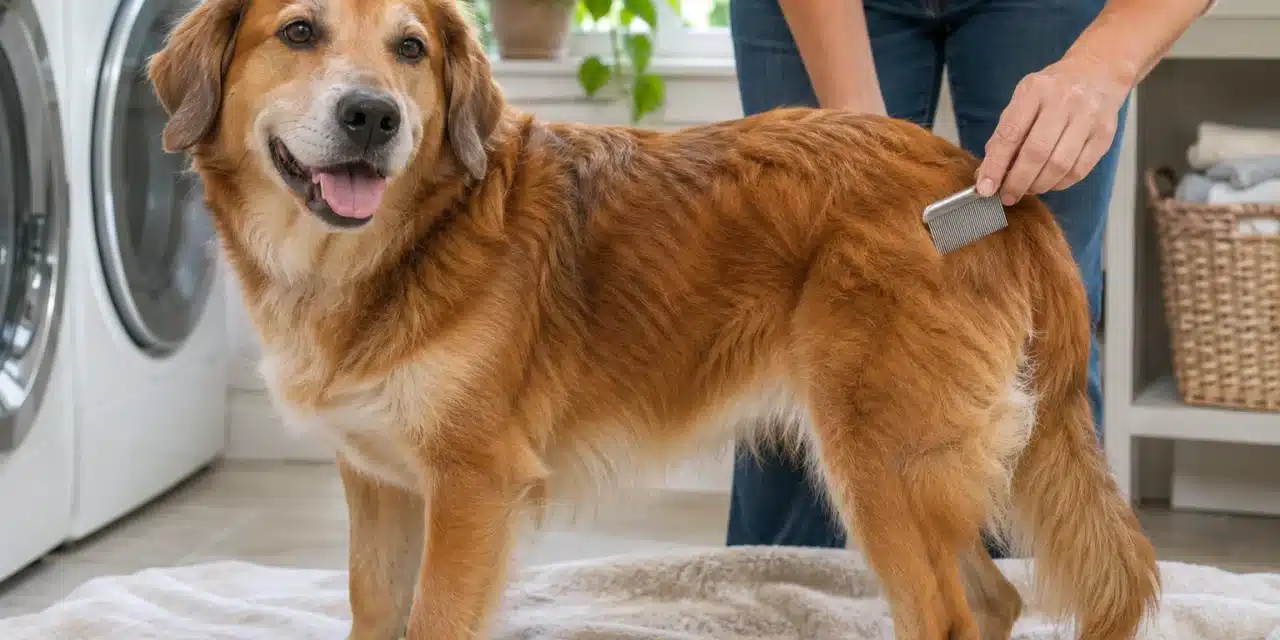
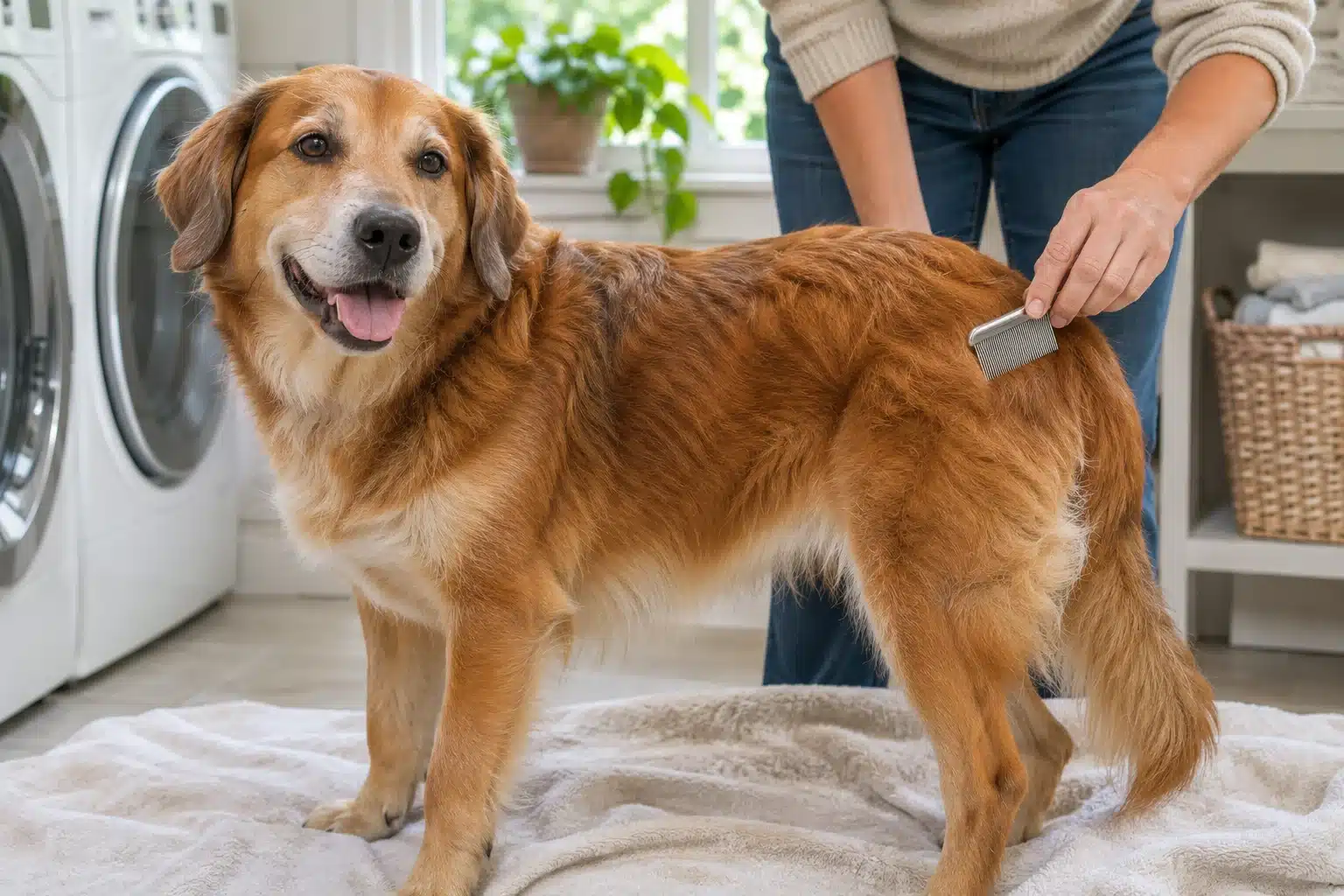
Gather a fine-toothed flea comb, a white paper towel, a little plain water, and good light. A regular brush can move debris around without catching the smallest grains. Choose a spot where your dog can stand or lie comfortably without slipping. If you’re working with a long or dense coat, part it with your fingers first so you can see the skin and get the comb close to the roots. Work around tangles gently. If the dog pulls away when you touch a patch, leave that area alone and make a note of where it hurts.
Begin at the base of the tail and work over the rump with short strokes in the direction the hair grows. Check the belly and inner thighs where your dog will tolerate it, then look around the neck and between the shoulder blades. Pay special attention to any area your dog keeps licking or nibbling. After each pass, tap or wipe the comb onto the white towel. Looking at each pass separately gives you a better idea of where the debris came from. Stop before a restless dog turns the check into a struggle. You can check another area later.
What flea dirt looks like on a damp paper towel
Look for dark grains a bit like ground black pepper. Put a few on a clean part of the paper towel and moisten that area with plain water. Wet the paper enough to spread the color, then watch the space around the grains. Flea dirt contains digested blood, so it can soften and leave a reddish-brown stain or halo. Dry soil can look almost identical in the coat, which is why the color spreading into the white paper matters more than the dry speck’s shape.
Collect a fresh sample if the first one is mixed with a scab. Blood from scratched skin can also stain the towel. Try a few comb strokes through a nearby patch of intact skin. Photograph the grains and any staining beside the dry part of the towel so you can show the result at the vet. Skip the home test if you find open or sore skin. An exam can help identify the source of the itching and assess whether the skin also needs care.
You may also catch a moving adult flea. It’s small, dark and quick, and can disappear into dense hair between comb strokes. Flea dirt or a live flea can both be useful clues when you call the vet. A clean comb on one pass leaves the question open. Your dog may groom away evidence, and some dogs with flea allergy can itch intensely with very few fleas. If the scratching continues, tell your vet what you found, which spots you checked and how often your dog seems uncomfortable.
Check the places where your dog naps
Once you find evidence on your dog, look beyond the coat. Flea eggs can fall off wherever a pet spends time, and immature fleas can develop in bedding, carpet and sheltered crevices. Think about yesterday’s naps. The blanket on the sofa and the rug under your desk may get more dog traffic than the bed you bought for them. Start with those favorite spots, the washable crate mat, and any blankets that move between rooms. Include the car blanket if your dog rides with you regularly.
Launder washable bedding and dry it according to the fabric instructions. Vacuum rugs, the edges of rooms and the gaps under removable sofa cushions. Empty the vacuum outside afterward. Put clean bedding back in the places you’ve cleaned, then repeat the routine as part of the flea-control plan your vet recommends. A comb gives you a way to look for evidence again later, while cleaning targets places where the next generation may be developing.
If you live with a cat or another dog, tell your vet that when you call, even if only one pet is scratching. Each pet needs a plan appropriate to its species, age, weight and health. Keep dog-only products away from cats and ask the vet about close contact between pets, especially if they groom each other. Bring the name or a photo of anything any pet has recently received. With that information, your vet can help you avoid overlapping products or a gap in protection.
Choose prevention with your vet
Tell the clinic when you first noticed the scratching, whether you found live fleas or dark grains, and when each pet last received flea prevention. Have your dog’s current weight and age handy. Mention other treatments, prior reactions, and frequent swimming or baths. A dog that goes in the lake every weekend may need a different plan from a dog that rarely gets wet. Your vet can help you decide whether a collar, an oral preventive or a topical product fits the household and whether an active infestation warrants additional measures. Our guide to flea collars for dogs compares label details you can bring to that conversation.
If your vet recommends the Seresto Large Dog collar, its U.S. label is for dogs over 18 pounds and at least seven weeks old. Buy the correctly labeled U.S. size from a reputable seller. Its long replacement interval may suit a dog that seldom swims, but the label shortens the expected flea-control period to five months for dogs swimming at least monthly. EPA also requires warnings about adverse effects reported with Seresto collars. Keep the packaging and seek veterinary advice if you see a reaction. The collar addresses fleas on the dog. Keep following the household plan while you deal with bedding and other places your dog rests.

Seresto Flea & Tick Collar · Large Dog
What to track over the next few weeks
Write down the date you first saw the specks, the date each pet started its vet-recommended plan, and when the next application or replacement is due. When you recheck your dog, use the same comb and roughly the same spots so the results are easier to compare. Note whether you’re seeing live fleas, fresh-looking specks, or continued scratching with a clean comb. That distinction can help your vet decide what to look for if the problem drags on.
You may still see fleas as new adults emerge from pupae that were already in the house. Read the schedule on the label and ask the clinic before changing the plan. Putting on extra products or repeating an application early can expose your dog to more pesticide than intended. Tell the vet who is still affected, where you’ve found flea evidence, which products you’ve used and which areas you’ve cleaned. That’s more useful than trying a different product every time you spot a flea.
When to call sooner
Call your veterinarian promptly if your dog is chewing the skin raw, has sores or hair loss, or seems unwell. Seek urgent veterinary care for very pale gums, weakness or collapse, particularly in a young puppy or a dog carrying many fleas. A heavy infestation can contribute to anemia. If redness, vomiting, trembling or unusual behavior starts after you fit a flea collar, remove the collar immediately and contact your veterinarian. Keep the package so you can give the clinic the exact product name and registration number.
Even if you find no flea dirt, a dog that keeps scratching deserves a closer look. Several skin problems can cause similar signs. A photo, a description of where your dog is itchy, and a short record of what you’ve already tried can give the clinic a useful starting point.