The Hunting Dog is supported by its audience. As an Amazon Associate, we earn from qualifying purchases.
The bottom of a dog food bag is an easy place to forget about until you need the tiny code printed there. A bin can make dinner easier to scoop, but pouring the whole bag into it can separate the food from the information you need to identify it. Here’s how to set up a feeding station that keeps the kibble dry and makes each bag traceable, even if someone else in the household opens the next one.
Choose the spot before you buy the bin
Look for a cool, dry cupboard or pantry where you can reach the scoop without moving half the contents of a shelf. The FDA recommends storing dry pet food below 80°F (about 27°C). A garage that feels cool in the morning can heat up in the afternoon. A cabinet under a sink can be damp or exposed to leaks. Pick a shelf that can support the full bag, ideally somewhere your dog can’t nose the door open. In a household with several pets, give each food its own spot so that look-alike bags are easy to tell apart.
Measure the bag’s widest point and compare it with the opening of the bin. A tall bin can fit the volume of a full bag but still have an opening too narrow to lower the bag inside. Leave enough room at the top to fold the package shut between meals. If the bag and the bin are awkward to lift together, put the empty bin in its permanent spot before loading it. A smaller bag is worth considering if you have limited storage or your dog takes a long time to finish a large one.
Keep the kibble in the original bag
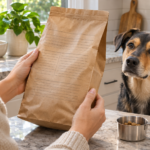
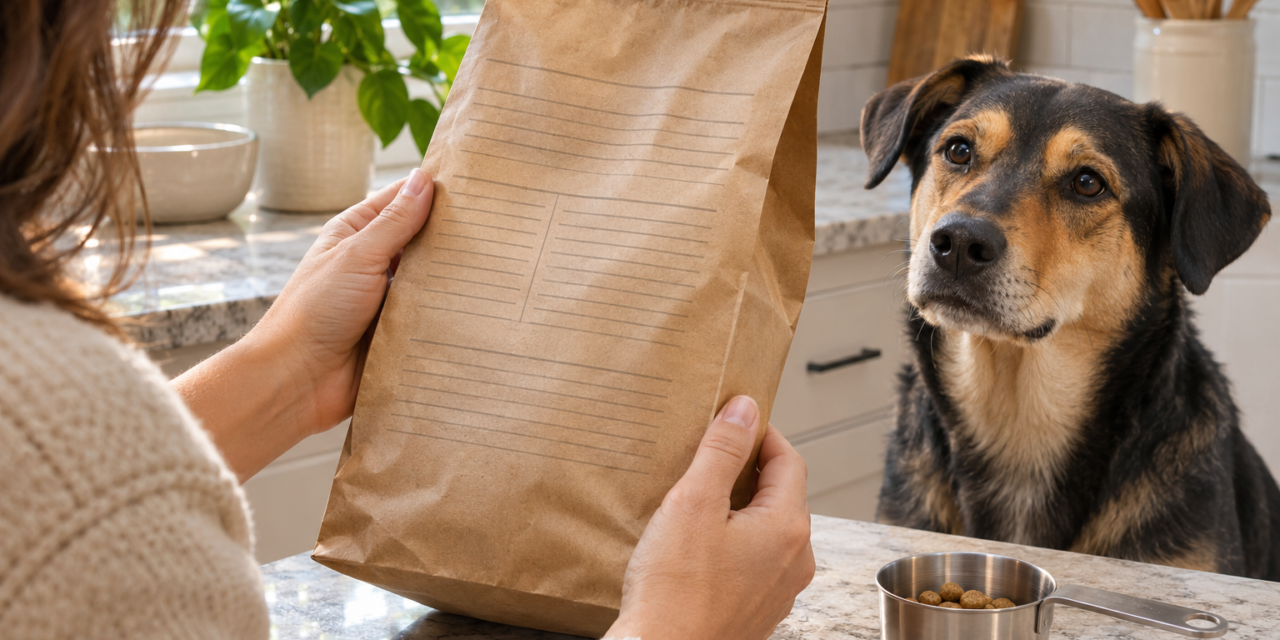
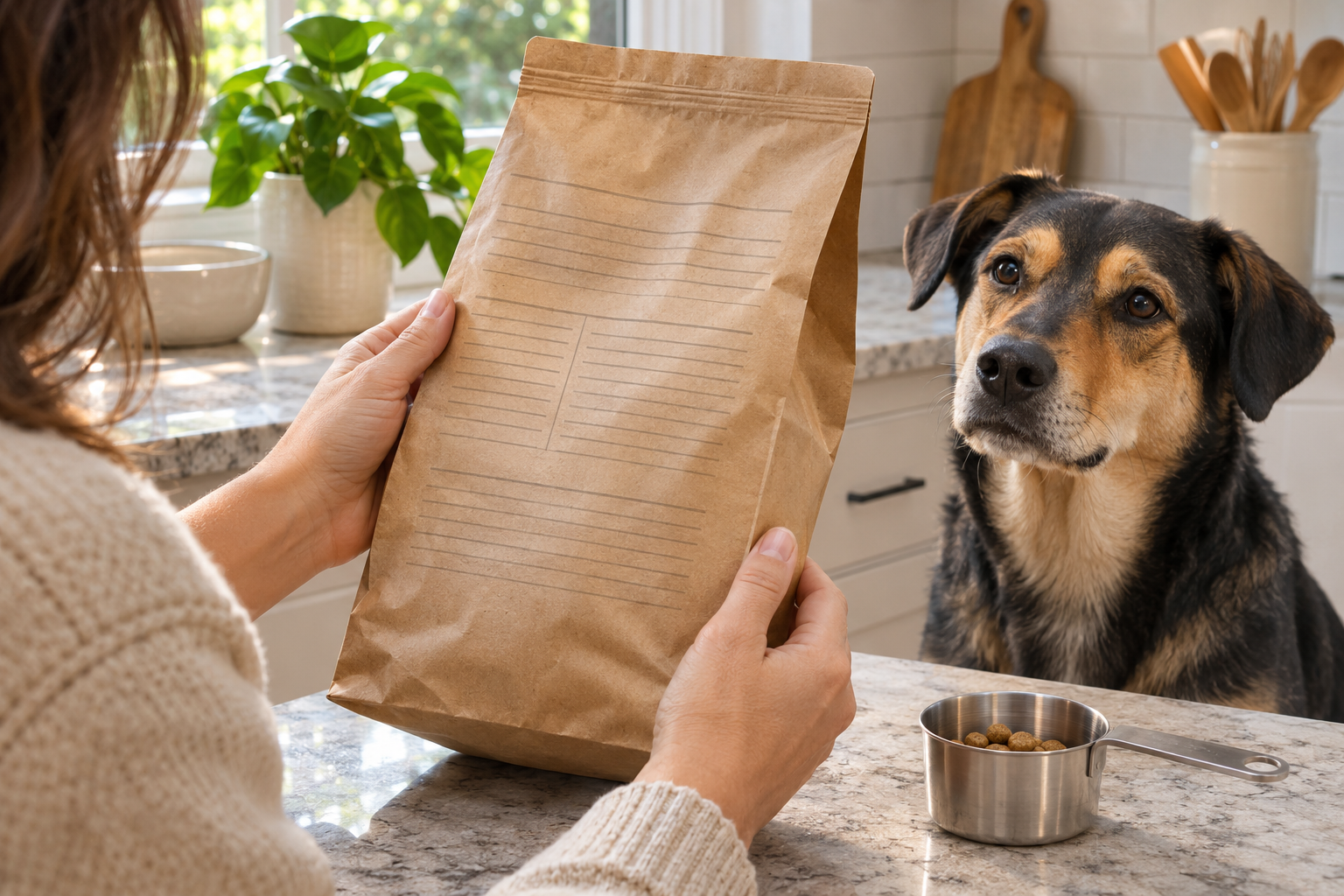
Set the bag upright inside a clean, dry container with a snug lid. Open the top without cutting through the date or lot stamp. After scooping dinner, squeeze out some excess air, fold the top down and clip it, or close the package’s original seal if it has one. Close the bin as well. Keeping the packaging around the food means the recipe name, directions and batch details stay together when you move the bin or ask someone else to feed your dog.
If the bag must be emptied into a container, start with a clean, thoroughly dry bin and lid. Keep the entire empty package somewhere accessible until that batch is finished. At minimum, save the full product and manufacturer names, UPC barcode, lot number and best-by date. Tape the information to the container and replace it every time a new bag is opened. When the last serving is gone, clear the loose pieces from the corners and wash and dry the bin before refilling it. Keep the clean scoop dry between meals, too.
Avoid topping up the old food with a fresh bag. Two bags with the same name may come from different lots. Once they are mixed, you may be unable to tell which batch your dog ate or which pieces need to be set aside if there is a recall. If you are deliberately transitioning between recipes, keep them in separate labeled bags and combine only the amount for the meal. Feeding directions vary by food, so keep both labels available during the transition.
If two dogs eat different recipes, mark the outside of each bin with the dog’s name and keep a scoop in each feeding area. Use a label that can be changed when a recipe changes. A scoop is easy to swap by mistake during a busy morning. Keeping each scoop with its bag makes the setup easier to follow, especially if one dog eats a veterinary diet. Leave the original package inside so anyone who is unsure can check the recipe before filling the bowl.
Take two photos when a new bag comes home
Take one picture of the front with the brand, recipe and bag weight in view. Take a second close-up of the printed lot and best-by date. These can appear along a seam, on the side, near the bottom or up by the seal. Photographs are especially handy when the print is faint or the bag is going straight into a bin. Angle it toward a lamp if the ink is hard to see and check that you can read every character before putting the bag away. If the barcode is on a different panel, take a separate photo of it.
Write the date you opened the bag on a piece of tape or in the photo caption. Keep the date printed by the manufacturer separate from the date you opened it. If you order the same food routinely, save the order record or store receipt with the photos so you can tell two identical bags apart. You can use a shared phone album or a note pinned on the pantry door. What matters is that a second person can find the current package details without guessing which photo belongs to which bag.
What this looks like with a 28-pound bag
Nutrish Real Chicken & Veggies Recipe, 28 lb. is a dry kibble formulated for adult maintenance. The manufacturer publishes 340 kcal per cup and recommends closing the package tightly between feedings or using an airtight container. This size makes the original-bag method especially useful if you keep the food in a bin and scoop from it every day. Check that the whole bag sits upright with enough clearance to fold the top. The food is an adult formula, so choose a growth-appropriate diet for a puppy. For a wider look at formats and life stages, see our guide to dog foods made in the USA.

Nutrish Real Chicken & Veggies · 28 lb
Compare every field in a recall notice
If you see a recall, open the notice itself and find the recipe, package size and identifying codes. Compare them with the original package or your photos, preserving any initial zeros, letters and spaces that help distinguish a code. Some notices cover one bag size or a range of dates. A photo of the logo alone won’t resolve whether your bag is included. If the stamp is smudged or the notice lists a code you can’t find, contact the manufacturer using the notice or packaging. Keep people who feed your dog informed and set the bag aside while you confirm.
If the bag matches, stop using it and follow the instructions in the recall notice about handling, returns or disposal. Keep the packaging where you can retrieve the details without leaving the food where a pet can reach it. If your dog seems ill after eating the food, contact your veterinarian and have the recipe, lot, timeline and any other foods or treats ready. A change in appetite or stool can have several causes. Those details give your veterinarian a more useful starting point than a brand name alone.
Record problems even when there’s no recall
If a newly opened bag has a strong unusual odor, visible mold, moisture or damaged packaging, set it aside and keep the original bag. Note where and when you bought it, when you opened it and what you observed. Take photos before you clean up or return the package. The manufacturer may ask whether other bags had the same issue. The FDA also accepts pet food complaints and asks for the lot code, full product name, package details and a description of what happened. If a regulator asks you to retain a sample, follow its handling instructions.
When the next bag arrives, finish or set aside the current lot, wash and dry the bin if it needs it, and repeat the same photo and labeling routine. A quick reset at the end of one bag saves you from guessing later. Ask a sitter or family member to scoop from the open bag, close it after dinner and leave the label with the food.