As an Amazon Associate, we earn from qualifying purchases.
A dog who ducks away when you reach for a collar is giving you useful information. The difficult part may be a hand moving over the head, a buckle clicking near an ear, or the unfamiliar weight against the neck. Before thinking about remote controls, help your dog feel comfortable with ordinary handling. You can practise that skill with a plain collar and rewards, without activating an electronic device.
The exercises below concern voluntary handling and a switched-off receiver only. They do not prepare a dog to tolerate electrical correction. The American Veterinary Society of Animal Behavior recommends reward-based training and advises against aversive methods, including electronic collars. A dog’s willingness to wear equipment does not tell you that an output from it will be comfortable.
Start by separating three different questions
First, can your dog comfortably approach you while you hold the equipment? Second, can the item fit without rubbing, excessive pressure or interference with other gear? Third, what training method are you planning to use? A positive answer to the first question does not settle the other two. Keeping them separate prevents a quiet fitting exercise from turning unexpectedly into a correction session.
Write down the immediate goal in everyday language. For example: “My dog will remain relaxed while I briefly touch the side of his neck.” That is something you can observe and reward. “My dog will accept anything” is too broad to guide a session. If the actual problem is chasing, barking or poor recall, make a separate reward-based plan for that behavior.
Set up a short session your dog can leave
Choose a quiet room or securely fenced garden with good footing. Put away the remote, leave the receiver switched off and have small rewards ready before inviting your dog over. Keep children and other pets out of the immediate workspace. Sit or stand beside the dog rather than leaning directly over the head. Give yourself room to lower your hands and pause.
A practical first session might contain just three easy repetitions, followed by a break. That is a starting example, not a daily quota. If your dog walks away, let the session stop. Do not follow with the collar or hold the dog in place to complete the final repetition. The useful result is a comfortable interaction, even if the collar never gets fastened that day.
Introduce the sight, sound and touch separately
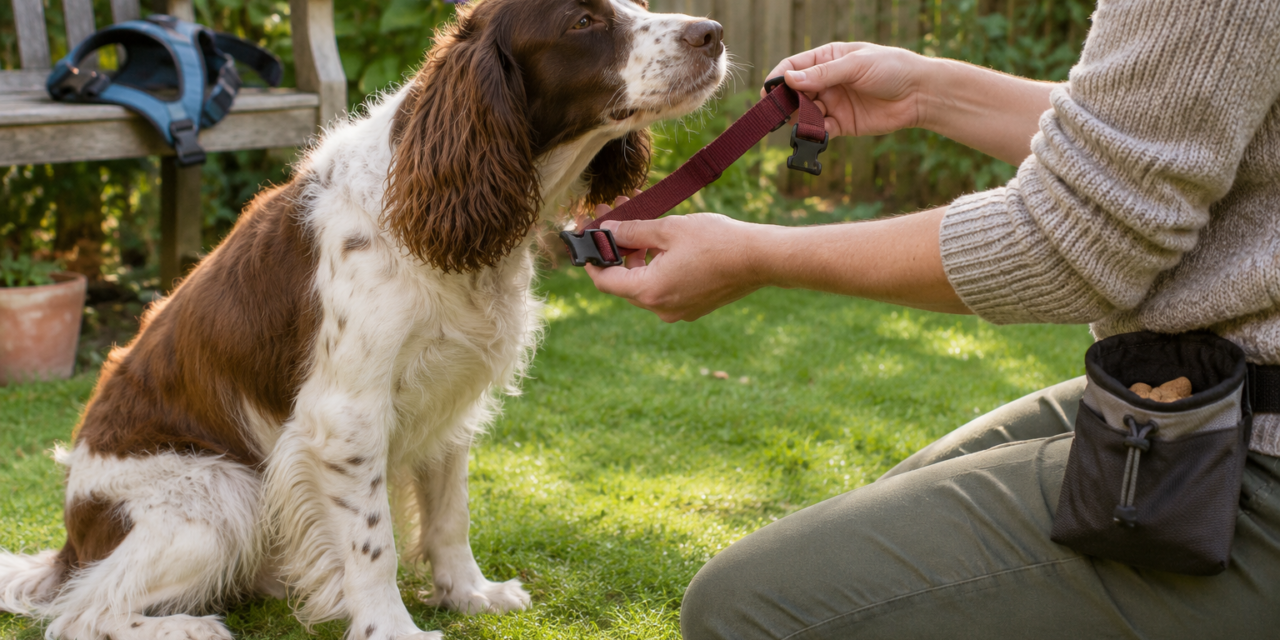
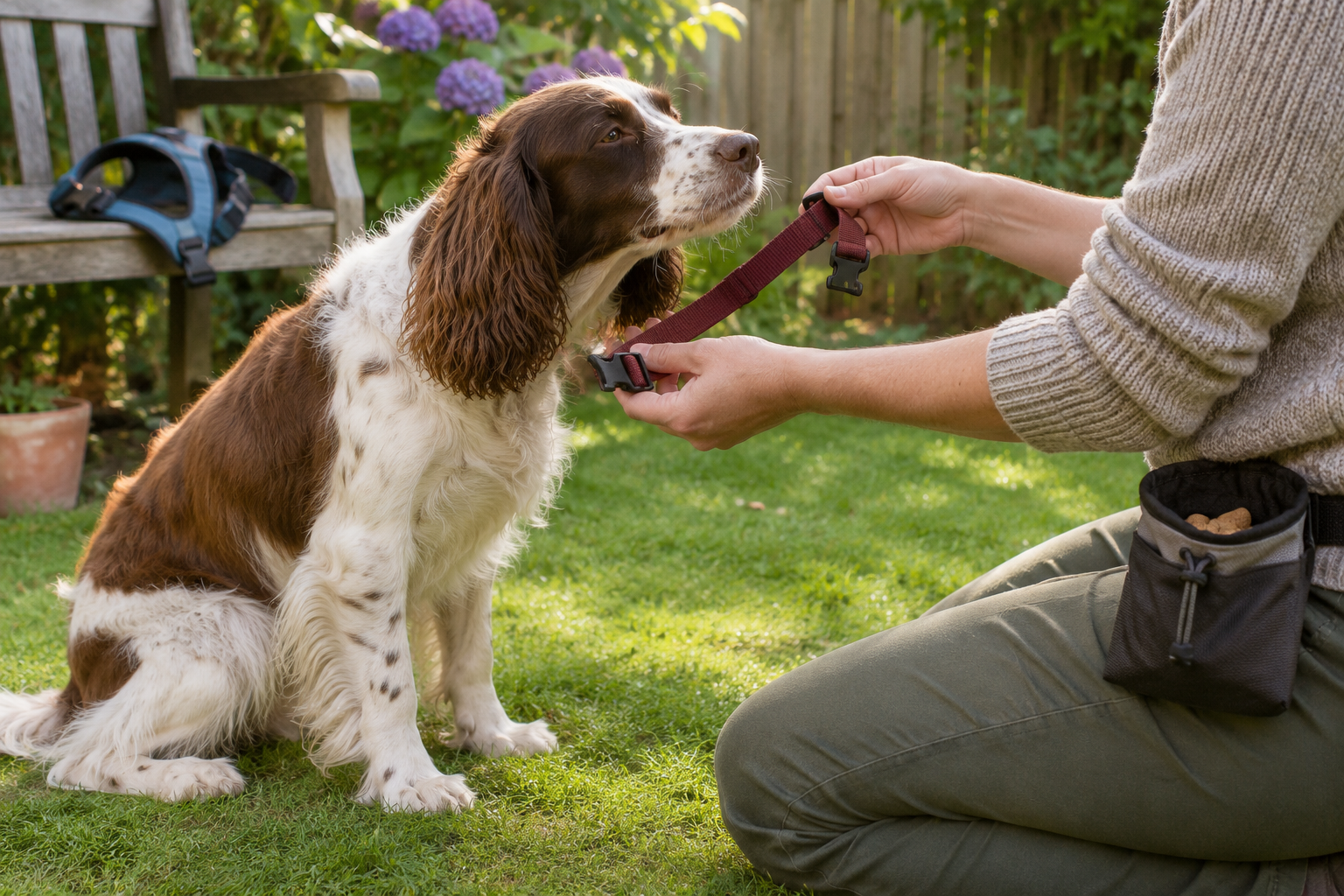
Begin with the plain collar lying in your hand at a distance where your dog remains relaxed. When the dog notices it, offer a small reward. Lower the collar again. You are building a pleasant association with its appearance, rather than asking the dog to put a head through an opening immediately. Keep the object still enough that it does not swing into the face.
Next, practise the buckle sound away from the neck. Click it once at a comfortable distance, then offer a reward. A dog who startles needs a quieter, more distant version on another attempt. Separately, bring an empty hand toward the shoulder, touch briefly if the dog is comfortable, then reward. Progress toward the side of the neck in small steps instead of combining reach, touch and fastening at once.
Make moving into the collar a voluntary choice
For an over-the-head collar, hold a generously sized opening still and reward the dog for approaching it. At first, a nose moving toward the opening may be enough. Later, reward a little more movement through it. Keep your other hand from pushing the head forward. For a buckle collar, practise laying the open strap loosely around the neck before bringing the ends together.
Avoid holding food beyond an opening that is too small or closing the buckle while the dog is distracted eating. That can produce a completed fitting without a comfortable dog. Instead, pause between stages and notice whether the dog chooses to return. A helpful checkpoint is being able to remove the collar as calmly as you put it on. Removal deserves practice too.
Use the whole dog’s response to decide the next step
Look for ordinary, loose movement and the ability to disengage and come back. Turning the head away, repeated lip licking, crouching, freezing or trying to leave can indicate discomfort in context. A still dog is not automatically a relaxed dog. Watch what changes when your hand approaches, rather than judging one isolated gesture.
If the dog becomes tense, lower your hands and make the next attempt easier. You might return to showing the collar from farther away or touching the shoulder instead of the neck. Taking a treat alone is not a pass mark. Record the simplest step at which the dog moved freely, so the next session starts with something achievable rather than repeating the difficult ending.
Check the equipment before adding its weight
A receiver changes the shape and weight of a collar. Inspect the strap, buckle, casing and contact area before placing it on the dog. Set damaged equipment aside. Make sure the receiver is off, and keep the remote somewhere it cannot be pressed accidentally. Charge equipment away from the dog; a charging lead should never be part of a wearing exercise.
Use the fit instructions supplied for the actual receiver. A casual two-finger rule for a flat identification collar should not replace model-specific guidance. Do not shave the neck to make a receiver sit closer. If fitting appears to require pressure on sore skin, a cramped arrangement under another collar or a receiver that overwhelms a small neck, stop and reconsider the equipment.
A concrete example: PetSafe’s standard 300 Yard set

This is the PetSafe 300 Yard Remote Trainer, Standard, For Medium/Large Dogs, 1 Dog, ASIN B073WYL89X from our remote collar comparison. Its digital display and tactile buttons make the controls identifiable, and both parts are rechargeable and waterproof. It illustrates why you need to distinguish a complete set from an extra receiver and learn the controls away from the dog.
It still has static output: its high-level lock covers levels eight through fifteen and does not disable every output. PetSafe specifies at least 8 pounds and six months; this Amazon offer lists a 6–23-inch neck, while the manufacturer gives 6–27 inches for Standard. Plan within the narrower offer limits. Its manual warns against attaching a leash to the contact-point collar. These are equipment facts, not a recommendation to use electrical correction.
Add brief movement without adding a remote signal
Once fitting and removal are comfortable, try a few relaxed steps in the quiet practice area with the receiver off. Reward an ordinary check-in, then remove the equipment. On another occasion, you might add a short sniff around the garden. Change one element at a time: duration, movement or location. Introducing all three together makes it difficult to tell what caused a problem.
Keep your usual physical safety measures. A receiver’s advertised radio range does not stop a dog reaching a road or another animal. Use a suitable separate harness and leash for necessary restraint, without pressure against the receiver. Avoid rough play and situations where the equipment can snag. Do not leave the dog wearing it unattended while you judge whether it is “getting used to it.”
Keep a useful record and know when to stop
After each session, note the location, the exact handling step and the dog’s response. “Relaxed while strap touched shoulder; moved away when buckle approached” is more useful than “bad with collar.” It gives you a clear place to restart. You can also record whether removal was easy and whether the skin looked normal afterward. A simple sentence is enough; you do not need a complicated training chart.
Remove the equipment if you find redness, rubbing or a sore, and seek veterinary advice for injury or persistent irritation. New sensitivity to neck handling also deserves a health check. If your dog growls, snaps, panics or has a bite history, do not restrain the dog to repeat the exercise. Ask your veterinarian and a qualified reward-based behavior professional for an individual plan. Comfortable handling is a skill to build at the dog’s pace, not a test the dog must endure.