As an Amazon Associate, we earn from qualifying purchases.
A dog toilet corner should make everyday trips outside easier: one place to head for, a surface your dog accepts, and a cleanup routine you can actually maintain. A decorative hydrant can mark that corner, but the location becomes useful through practice. Start with your dog’s existing habits before buying materials or rearranging the whole garden.
Decide what you want the area to do
For a house-trained adult, the project may simply mean moving most garden toilet trips away from flower beds. For a puppy, learning the corner sits inside the larger job of house training. For a recently adopted dog, the first priority may be feeling comfortable enough to toilet outside at all. These are different starting points, so measure progress against the problem you actually have.
Write down a practical goal, such as “morning and bedtime toilet trips happen in the back corner.” Avoid expecting every outdoor urine mark to disappear. A brief mark on a walk and emptying a full bladder are not identical behaviors. Both male and female dogs can mark, and an upright target is optional for dogs who prefer to squat.
Choose the location before changing the surface
Walk the proposed route from the door while holding a leash, a waste bag and a treat pouch. Can you get there comfortably in the dark or rain? Can the dog turn without squeezing between a planter and a fence? A corner that looks tidy from the kitchen may be awkward during an urgent early-morning trip. Choose access you can repeat every day.
As a layout exercise, temporarily mark the boundary with objects the dog cannot swallow, then remove them before unsupervised access. Check whether the corner overlaps a gate swing, hose route or children’s play space. Leave enough room for the dog’s normal circling and posture. There is no universal footprint that suits a tiny puppy and a large adult equally well.
Start with a surface the dog already accepts. A dog used to grass may hesitate on a newly installed gravel patch; changing location and footing together makes it harder to tell what caused the hesitation. If a surface change is necessary, make it gradual. Keep a familiar section available during the transition, and avoid rebuilding a successful area just because another material looks neater.
Add a marker only if it helps the setup
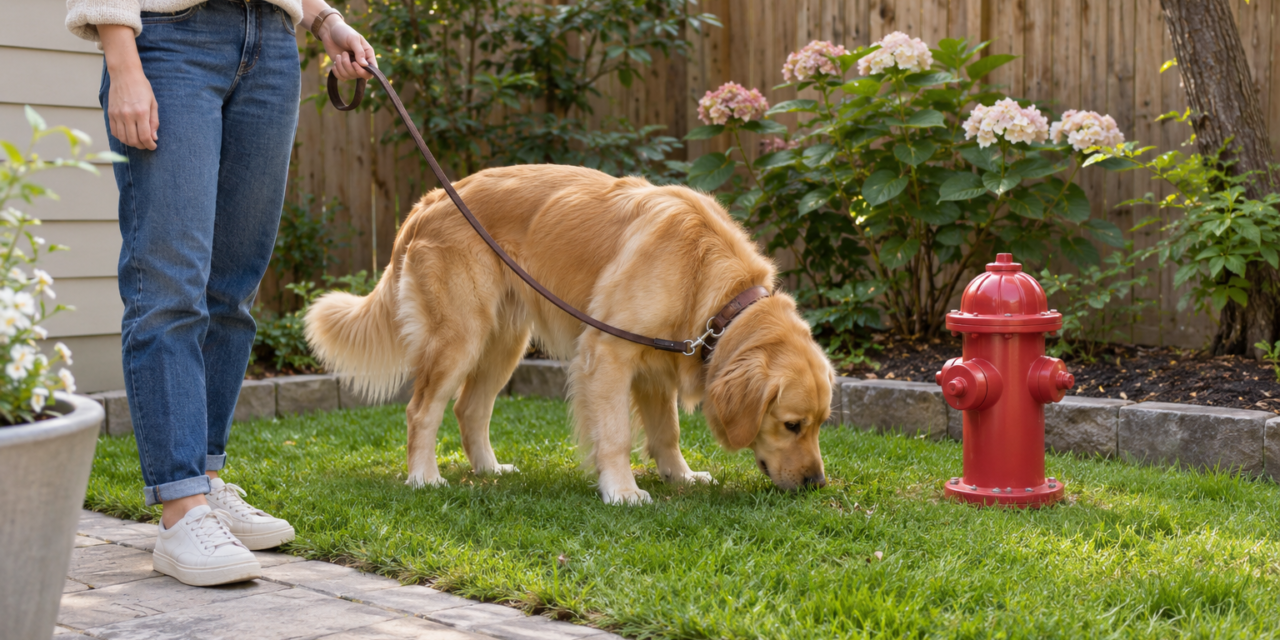
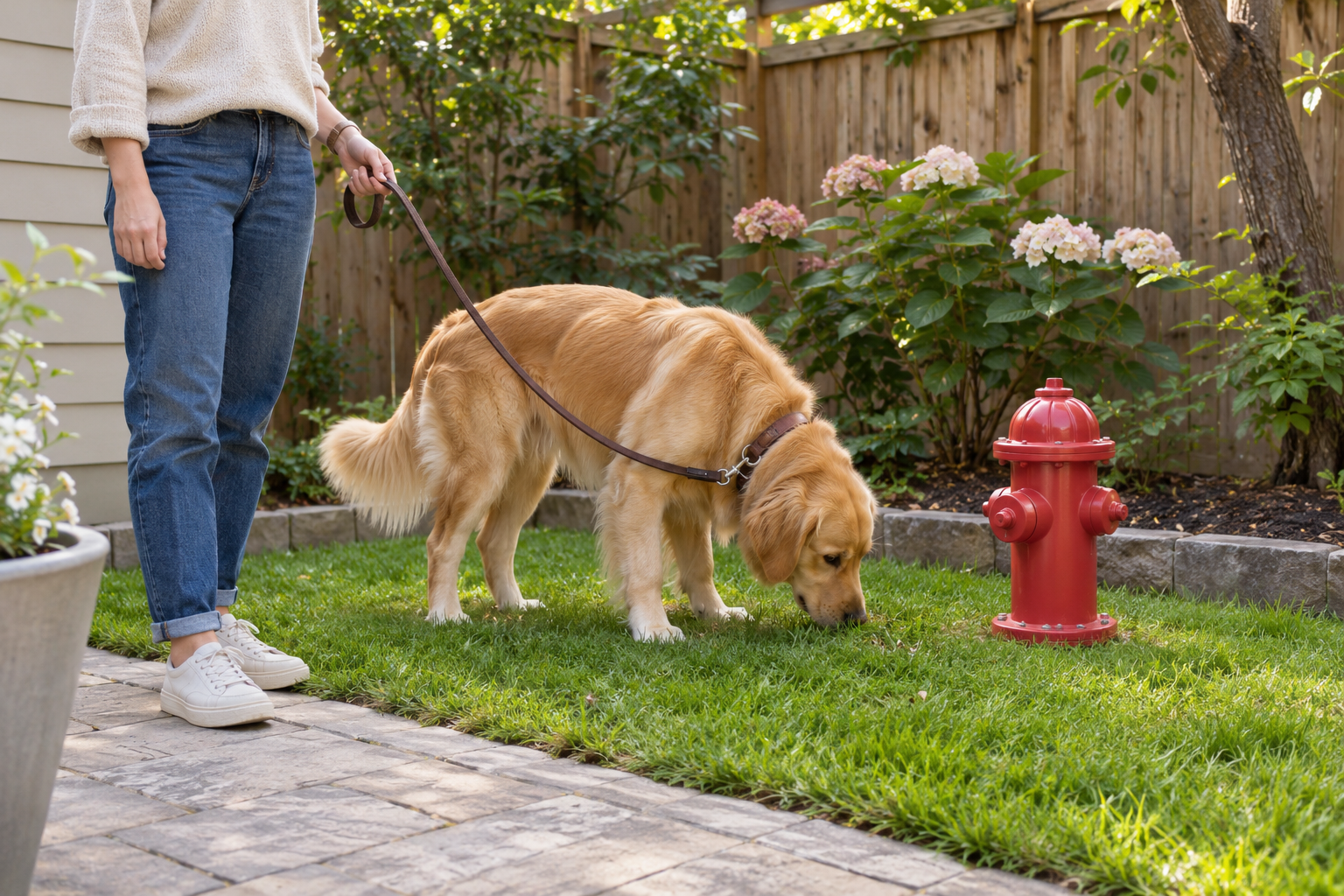
A hydrant can give the corner a visible landmark and offer a vertical target for a dog who likes one. It does not collect urine, provide drainage or make the surrounding ground immune to damage. Our dog fire hydrant buying guide compares the different constructions, sizes and mounting options.
One option for a soil-based corner: Beuta 24-Inch Red Fire Hydrant

The exact red Beuta model 3602 measures 11 × 11 × 24 inches and uses rotomolded resin. Three 12-inch securing spikes come with it, which is useful when the corner has suitable soil. Install the spikes fully, after checking for buried services or irrigation, and keep the dog away while setting it up. The limitation is straightforward: those spikes do not secure it directly to concrete, and the product does not establish a built-in scent attractant. Choose it for the landmark and mounting system, without expecting the post to train the dog.
Make the first visits easy to succeed at
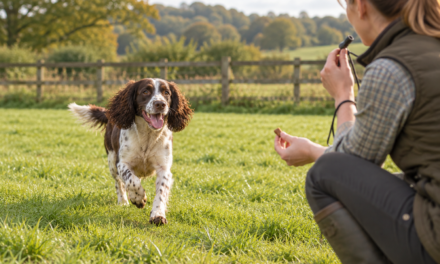
Go outside with your dog rather than opening the door and hoping the new corner is chosen. Use a leash to guide the route gently, leaving room to sniff and circle. Bring the reward with you. The important moment happens beside the toilet area, so a treat left on the kitchen counter will be poorly placed for teaching this particular habit.
For a puppy, offer a visit after waking, eating and active play, as well as whenever you see signs that a trip is needed. An adult changing habits also benefits from predictable opportunities. Do not stretch the interval just to make a training attempt more likely. If the dog is urgently seeking another safe place, let them relieve themselves and simplify the next visit.
Wait quietly for a few minutes. When the dog finishes in the area, acknowledge the success calmly and give a small reward while you are still outside. If nothing happens, return to close supervision and try again soon. A failed attempt is information about timing or comfort, not a reason to hold the dog beside the post indefinitely.
Keep a potty cue simple
You can add a short cue once you recognize when your dog is about to go. At first, pair the words with the behavior already happening; do not repeat them continuously while the dog sniffs. Keep the sound calm enough that you do not interrupt the dog midstream. Reward after completion, then gradually use the cue earlier as the association becomes familiar.
Keep the pleasant parts of going outdoors available afterward. If every successful toilet trip immediately ends the chance to sniff, a dog may become reluctant to finish quickly. A little exploration after the reward can fit the routine. Later, practice the cue in other appropriate places too, so the dog does not depend on one ornament when traveling.
Use a small log to find the sticking point
For several days, jot down the time, the route, whether your dog toileted, and anything unusual about the visit. “Used grass beside the post after breakfast” is more useful than “good day.” “Avoided the corner while the sprinkler ran” gives you something specific to change. This is a household troubleshooting record, not a deadline for completing training.
For example, suppose morning visits work but evening visits fail. Before buying a different post, compare lighting, noise and access at those times. Perhaps a garden chair blocks the route after dinner, or another dog waits at the gate. Change one practical detail and watch the next few visits. Keeping successful parts steady makes the result easier to interpret.
Plan cleanup around the ground, not just the post
Urine reaches the surface around a hydrant. Concentrated urine can damage grass, so a post is not a lawn-protection guarantee. University of Illinois Extension recommends promptly diluting affected lawn spots with water and removing feces. Keep drinking water available as usual; changing the dog’s water access to protect turf is the wrong direction for this project.
Make cleanup convenient by keeping bags and a watering can where you can reach them. Follow any cleaner’s directions for the particular surface and keep pets away during the stated contact and drying periods. Inspect the post at the same time: loose stakes, cracked resin or damaged metal edges need attention. A clean-looking ornament is not enough if the ground stays unpleasant.
Respond to setbacks without adding pressure
If an adult has an indoor accident, quietly deal with cleanup and reconsider supervision and timing. Punishment can make a dog reluctant to toilet in front of you. An enzymatic product intended for the affected indoor surface can help remove lingering urine odor. Restrict unsupervised access to repeatedly soiled rooms while you rebuild a reliable routine.
Sudden changes deserve a different response from ordinary training slips. New accidents in a previously reliable dog, discomfort, unusual thirst or frequent attempts to urinate warrant veterinary advice. Straining with little or no urine can be an emergency; seek urgent veterinary care instead of waiting for the new toilet corner to work. A garden accessory cannot resolve a medical problem.
Keep the arrangement flexible
Once the corner is being used, check whether it still works for both of you. Can another household member follow the same route and cleanup routine? Does garden maintenance make the marker awkward to move around? Is there a safe alternative when weather or repairs block access? Keep a simple backup plan so one obstacle does not derail the day.
A useful corner earns its place by making repeated trips manageable. Keep the route predictable, preserve comfortable footing, and reward the behavior you want to see again. Adjust the setup when your observations point to a specific problem. The hydrant can remain a cheerful landmark while the real work comes from the routine you build around it.