A bed marked “large” may still be too short for a dog who sleeps stretched out. Measure the dog and the usable sleeping surface before comparing labels. A little planning also helps you choose a bed that fits the room and is practical to clean.
1. Watch your dog sleep
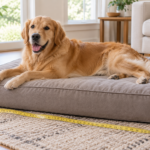
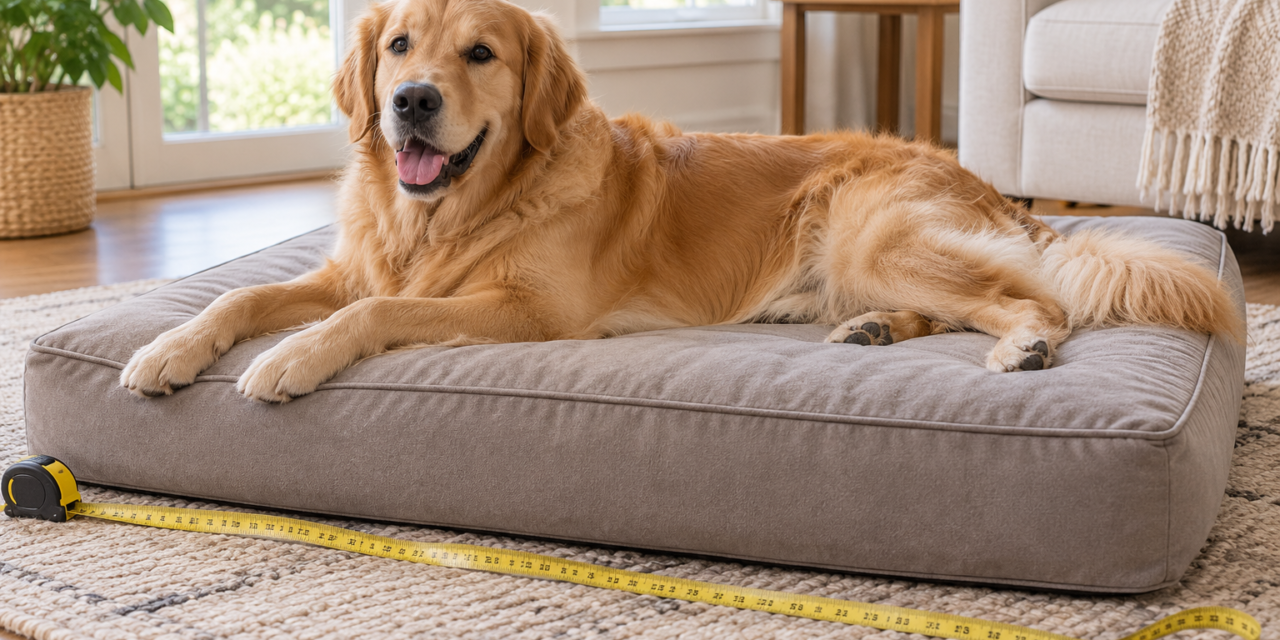
Look at your dog in their usual resting positions over several naps. A dog who stretches out on their side needs enough flat space for their body and legs; a dog who curls up may enjoy a raised edge. Many dogs change positions, so allow for both. The American Kennel Club recommends a bed large enough for a dog to lie on their side.
2. Measure the space your dog uses
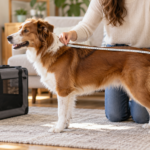
When your dog is resting comfortably, use a flexible tape to estimate the length from nose to the base of the tail, and note the width needed when they lie on their side with legs extended. Do not pull the dog into position or wrap a tape tightly around them. Add room for movement and compare the resulting footprint with each manufacturer’s size guide. For example, Kuranda’s guide for its raised beds suggests adding four inches to the dog’s length; other designs and sleeping positions may need more space.
3. Compare the sleeping area, not just the outside
Bolsters and thick rims occupy part of a bed’s footprint. A 50-inch exterior does not necessarily provide 50 inches of flat sleeping space. Look for a stated interior measurement or ask the seller. If your dog stretches out, compare both length and width with the measurements you recorded. If the bed is intended for a crate, compare its outer dimensions with the usable floor space inside the crate as well.
4. Consider height, support and cleaning
A low entry can be easier to negotiate than a high rim. Check the depth and construction of the filling, and whether the dog can rest without the bed compressing uncomfortably against the floor. “Orthopedic” alone does not tell you how a particular dog will respond. If your dog has pain or trouble getting up, ask your veterinarian about suitable support.
Check whether the cover comes off, which components can be washed, and whether they fit in your washing machine. Follow the manufacturer’s care label and let bedding dry completely before use. The AKC’s cleaning guide explains why care depends on the materials and instructions.
5. Map the footprint at home
Use a tape measure or a folded blanket to mark the bed’s external dimensions on the floor. Leave room for your dog to approach and get off comfortably, and check that doors and walkways remain clear. Once the bed arrives, observe whether your dog can settle and change position without hanging over the edges. Keep the packaging until you have checked the seller’s return conditions.
Ready to compare beds?
Our guide to beds for large dogs explains the features to compare. Check the exact size and care instructions for the selected variant before ordering.