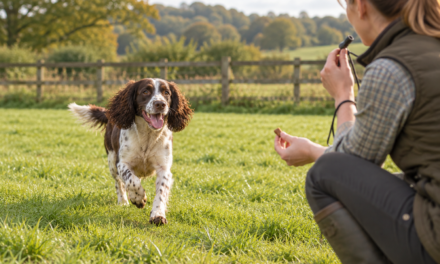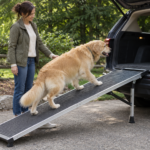
A car ramp can make the trip from the ground to an SUV more manageable, but a new surface, a moving car door and a steep-looking walkway can worry a dog. Teach the skill before the day of a vet appointment or a long drive. A few quiet, successful sessions can help your dog learn what the ramp is for and give you time to find a setup that works for both of you.
If your dog has new trouble standing, limps, cries, suddenly refuses to jump, or has recently had surgery, speak with your veterinarian before practicing. A ramp is a way to change how a dog reaches a vehicle; it does not diagnose or treat pain. Your veterinarian can advise whether walking up or down a slope is appropriate and whether your dog needs physical support.
Start with the right setup
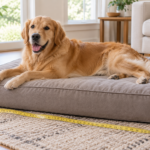
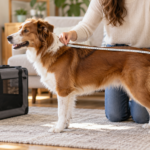
Measure from the ground to the point where the dog will step into your vehicle. Measure the width of the opening and the space available behind or beside the car. A longer ramp generally gives a gentler incline at the same loading height, but it also needs more ground clearance and storage room. For example, a 30-inch loading height on a 70-inch ramp produces an incline of roughly 25 degrees when the ramp rests at that height. This is a geometric example, not a recommended maximum: comfort depends on the dog, footing and setup.
Choose a walking surface wide enough for your dog to place all four paws comfortably, with room to recover balance. A broad dog that turns sideways or keeps a paw close to the edge may need more width. Check the manufacturer’s animal weight rating against your dog’s current weight and any equipment the dog carries. Do not assume a rating for an animal also permits a person to stand on the ramp.
Consider what you can lift. A ramp that works beautifully once deployed is less useful if you cannot safely carry and place it. Measure its folded dimensions against the space available inside your vehicle, and practice opening and closing it without the dog nearby. Keep fingers away from hinges, and secure the folded ramp during travel so it cannot move around the cabin.
Make the surface familiar on level ground
Place the open ramp flat on a non-slip floor or level ground where it cannot rock. Clear the area of toys and other obstacles. Let your dog approach, sniff and investigate at their own pace. Mark a glance or a step toward the ramp with a cheerful word such as “yes,” then give a small treat away from the ramp. This gives the dog room to choose to come back.
Next reward one paw on the surface, then two paws, then a few steps. Place treats along the middle of the ramp to encourage a straight path, but keep your hands low and move slowly. A dog that circles away, freezes, refuses a favorite treat, or repeatedly jumps off may find the exercise too difficult. Pause, let the dog move away and return to an easier step later. Do not pull the leash, push the dog’s hindquarters or hold food so far ahead that the dog has to stretch or rush to reach it.
Keep early sessions short: a minute or two is enough to start. End after an easy success and put the ramp away. Some dogs will walk across in one session; others need several days of comfortable repetitions. Progress is individual, not a deadline.
Add a small, stable incline
Once the dog walks across the flat ramp willingly in both directions, raise one end only a little using a stable, appropriate support. The support must not roll, slide or collapse. If the ramp’s design does not permit this setup, start with a low vehicle or another use specifically supported by the manufacturer. Test the ramp with your hands before inviting the dog onto it, and keep the area clear in case the dog steps off.
Reward each deliberate step. Stand beside the ramp, not directly in front of the dog, so you do not block the route. Practice climbing and descending separately: coming down can feel different because the dog can see the ground and must shift weight forward. Place a treat just ahead of the next comfortable step, rather than luring the dog into a quick run. If the dog backs away or loses footing, lower the incline or return to flat practice.
A second adult can help by stabilizing the setup as directed by the manufacturer and keeping distractions away. Do not use hands as a substitute for a properly supported ramp. If your dog requires lifting or a mobility sling, ask a veterinarian or rehabilitation professional to demonstrate a suitable technique; an awkward lift can injure both of you.
Move to the parked SUV
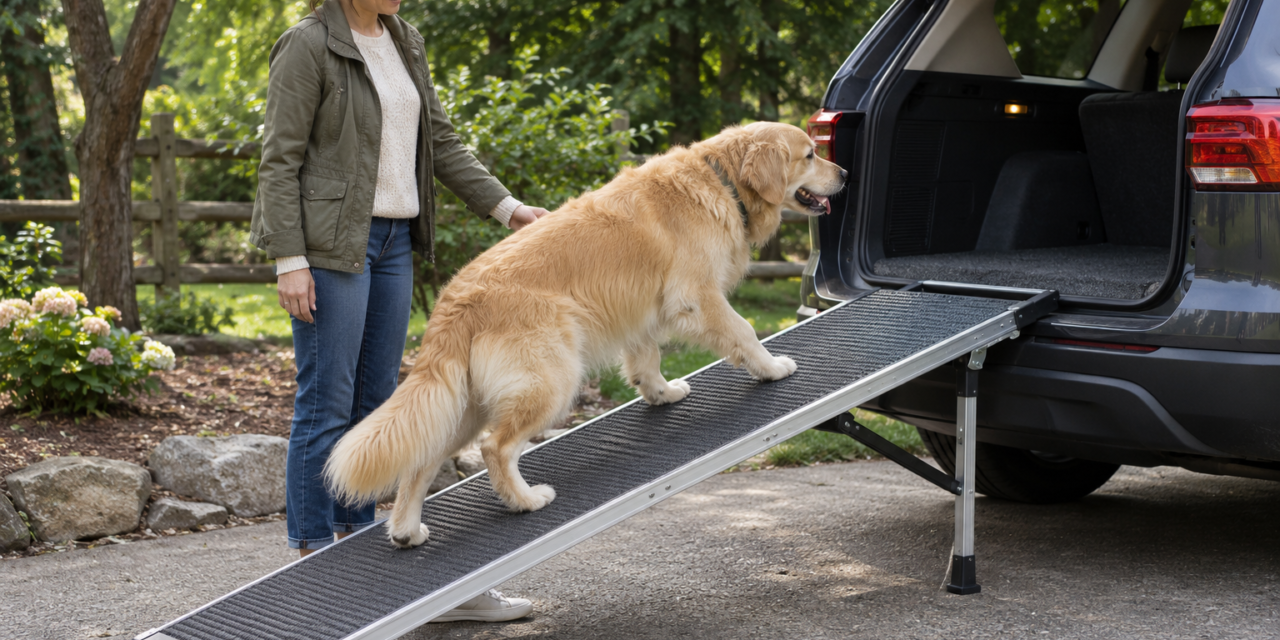
Park on firm, level ground away from traffic. Turn off the engine, apply the parking brake and open the door or hatch fully. Remove loose cargo from the landing area. Deploy the ramp according to its design, with the upper end fully supported on the intended vehicle surface and the lower end on stable ground. If the model uses a safety tether, attach it as directed. Check for wobble and movement before each use; reposition the vehicle or choose another spot if the ground is uneven or slippery.
For the first vehicle sessions, you do not need to drive anywhere. Reward the dog for walking a little way up, then calmly back down if that is comfortable. Gradually work toward stepping onto the cargo floor or seat. Once inside, offer a reward on a secure, non-slip landing surface and allow the dog to turn around without crowding. Practice coming out slowly as a separate exercise, with someone positioned to prevent a leap from the side without blocking the path.
A rear cargo opening and a side door create different problems. A side doorway may be narrow, and the vehicle seat may not support the full width of the ramp. Do not bridge an unsupported corner or improvise an attachment. Choose a ramp and any manufacturer-approved side-door support that fit the specific setup. If the route cannot be made stable and comfortable, use a different opening or another safe loading method.
One ramp to consider
The PetStep Original Folding Pet Ramp in Graphite is one option in our SUV dog ramp buying guide. Its manufacturer describes a 70-inch by 17-inch walking platform with a ridged rubber surface and a folding composite construction. It can be washed with soap and water, which is useful after muddy trips. It may suit a household looking for a full-length folding ramp and a surface without carpet. Its size also matters: at about 37 inches long when folded, it needs substantial storage space, and the maker recommends a separate support kit for side-door use. Make sure the whole arrangement fits your vehicle and your ability to handle it.
The-Hunting-Dog is supported by its audience. We may earn a commission from qualifying purchases made through links on this page.
Troubleshooting common problems
The ramp moves. Stop immediately. Check that the ground is firm and level, the ramp is fully opened or extended, the top contact is supported and any specified tether is attached. A folded floor mat or loose towel is not a reliable anchor. If movement persists, change the location or contact the manufacturer before practicing again.
The dog jumps off halfway. Lower the difficulty and reward a shorter distance. Look for a slippery surface, an obstacle at the top, a narrow route or an abrupt transition. Practice when the dog is rested, and keep a helper nearby to manage the surroundings. Never punish the jump; make the next repetition easier.
The dog goes up but refuses to come down. Teach descent from a very low incline first. Position rewards close to the walking surface and allow the dog to pause. If the dog seems painful, weak or unsteady, stop and seek veterinary advice rather than attempting more repetitions.
The dog rushes. Give small rewards for slow steps and practice short sections. Avoid holding a treat far in front of the nose. If the dog becomes overexcited, take a break and try again in a quieter setting.
The surface is wet or dirty. For the PetSTEP Original discussed here, wash the surface with soap and water or rinse it with a hose, then let it air dry before storage. Clear mud and debris from paws and ramp. Even a textured surface can become hazardous in poor conditions; use another safe loading method if footing is uncertain.
Make the skill useful on real trips
Practice with the ramp in several safe locations after your dog is confident at home. Add distractions one at a time: a different parking surface, an open hatch, another person nearby and finally a short ride. Recheck the ramp every time, since a familiar ramp can sit differently on a sloped driveway or a wet parking lot. Keep sessions positive even after the dog has learned the routine.
Once your dog is in the vehicle, stow and secure the ramp before driving. Use a suitable travel restraint or secured crate, and keep the loading area clear for the return trip. On arrival, set up the ramp before releasing your dog from the vehicle. A consistent cue such as “ramp” can help tell the dog when the path is ready, but it is not a substitute for supervising the descent.
Questions owners often ask
How long does training take? There is no universal schedule. Some dogs are comfortable within a few short sessions; others need longer, particularly if they have had a frightening slip. Judge progress by relaxed, repeatable behavior rather than the calendar.
Can a puppy use a ramp? A healthy puppy can learn to explore a stable, low surface with supervision and rewards. Keep practice brief and appropriate for the puppy’s size and coordination. Ask your veterinarian about restrictions for a puppy with an injury or mobility concern.
Should I leave the ramp in place? Follow the manufacturer’s instructions and keep children away from equipment intended for pets. Before every use, check that the ramp and its contact points remain stable. Store it secured when traveling.
What if my dog cannot use a ramp? A ramp is not right for every dog or vehicle. A veterinary or rehabilitation professional can help assess mobility and discuss supported lifting, an appropriate sling or another loading arrangement. Your dog’s comfort and a stable route matter more than completing a particular exercise.
Sources: American Kennel Club: dog stairs and ramps · PetStep product and care information