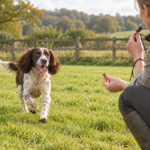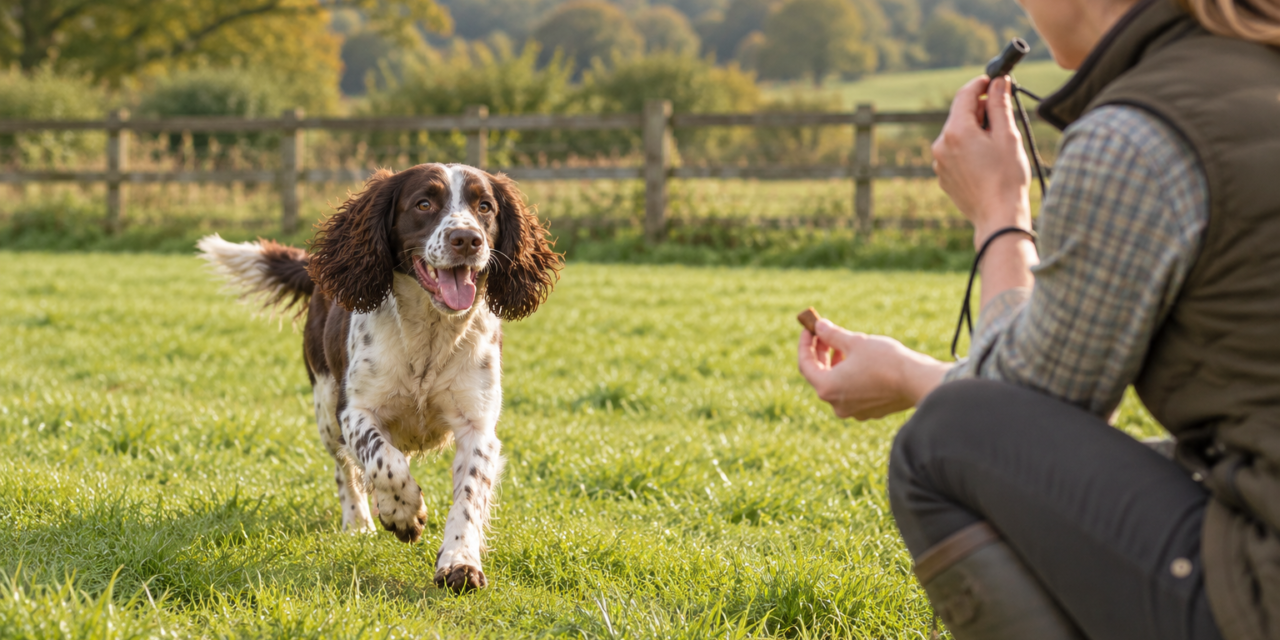
A whistle can give your dog a consistent signal across a field, but its sound does not tell a dog to come by itself. Teach the meaning with rewards, begin close to home and build difficulty gradually. Keep your dog safely contained or on a suitable long line until the skill is dependable in that setting.
Choose one signal and a reward
Pick a short, repeatable pattern, such as two brief pips, and use it only for recall. Everyone who handles your dog should use the same pattern. Keep a separate verbal recall too: a whistle can be forgotten or lost. Choose a reward your dog truly enjoys, such as small tasty treats or a favorite game.
A whistle may be much louder to your dog than it sounds to you. Begin gently, never blow it into the dog's ear, and stop if your dog seems worried by the sound. A silent or ultrasonic model is not necessarily inaudible to every person, nor is it a guarantee that a dog can hear it. If hearing seems to have changed, speak with your veterinarian and consider teaching a visual cue in safe, close-range situations.
First make the sound good news
In a quiet room, with your dog nearby and relaxed, give your chosen whistle pattern softly, then immediately give a few small treats one at a time. Pause between repetitions. The goal is for the sound to predict something pleasant, not to startle the dog into moving. If your dog moves away or refuses food, stop and make the setup easier; get help from a reward-based trainer if the reaction continues.
Add the recall
- Start a few steps away in a quiet, enclosed place. When you expect your dog to come, give the whistle pattern, then your familiar verbal recall.
- Encourage your dog toward you. As they arrive, praise and deliver the reward. Gently take the collar or harness if they are comfortable with that handling, then reward again.
- Repeat in short, enjoyable sessions. As your dog begins to move toward you after the whistle, give them a moment to respond before adding the verbal cue. Gradually fade that extra cue when the whistle alone is understood.
- Build distance in small increments, then practice in another secure place. Add only one difficulty at a time: distance, a new location or a mild distraction.
Reward even a slow return. Calling a dog and then scolding them can make returning less appealing. Some recalls can end with a treat and permission to resume sniffing or playing, so the signal does not always predict the end of fun.
Move outdoors safely
Use a fenced area or a long line attached to a well-fitting harness in a suitable open space; avoid roads, tangles and situations where the line could injure anyone. Do not yank the dog toward you. If they do not respond, calmly go to them or guide them gently and make the next repetition easier. A long line is a management aid, not proof that recall is reliable.
Start with a quiet yard before trying a park, and give wildlife, roads and other dogs plenty of distance. Practice in different environments as your dog succeeds. Even a well-trained recall can fail, especially around exciting distractions, so follow local leash rules and keep physical control where a mistake could be dangerous.
Troubleshooting
- The dog ignores the whistle: reduce the distance and distraction, use a more valuable reward and rebuild the sound-and-reward association. Avoid repeating the signal over and over.
- The dog comes only when food is visible: reward from a pocket after the dog arrives rather than showing the treat in advance. Continue paying well for successful recalls.
- The dog returns but dodges your hand: separately practice a gentle collar touch followed by a treat, starting when the dog is already beside you.
- The dog appears frightened: stop using the sound and consult a qualified reward-based trainer; ask a veterinarian about sudden changes in hearing or behavior.
A whistle is a communication tool, not an automatic bark stopper. For more on choosing a consistent, suitable signal, see our dog whistle buying guide.
Sources and further reading
- American Kennel Club: dog whistles and training
- American Kennel Club: building a reliable recall
- Dogs Trust: recall training
- Blue Cross: recall rewards, progression and long-line safety
- RSPCA: teaching your dog to come when called
Cover illustration: AI-generated.