The Hunting Dog is supported by its audience. As an Amazon Associate, we earn from qualifying purchases.
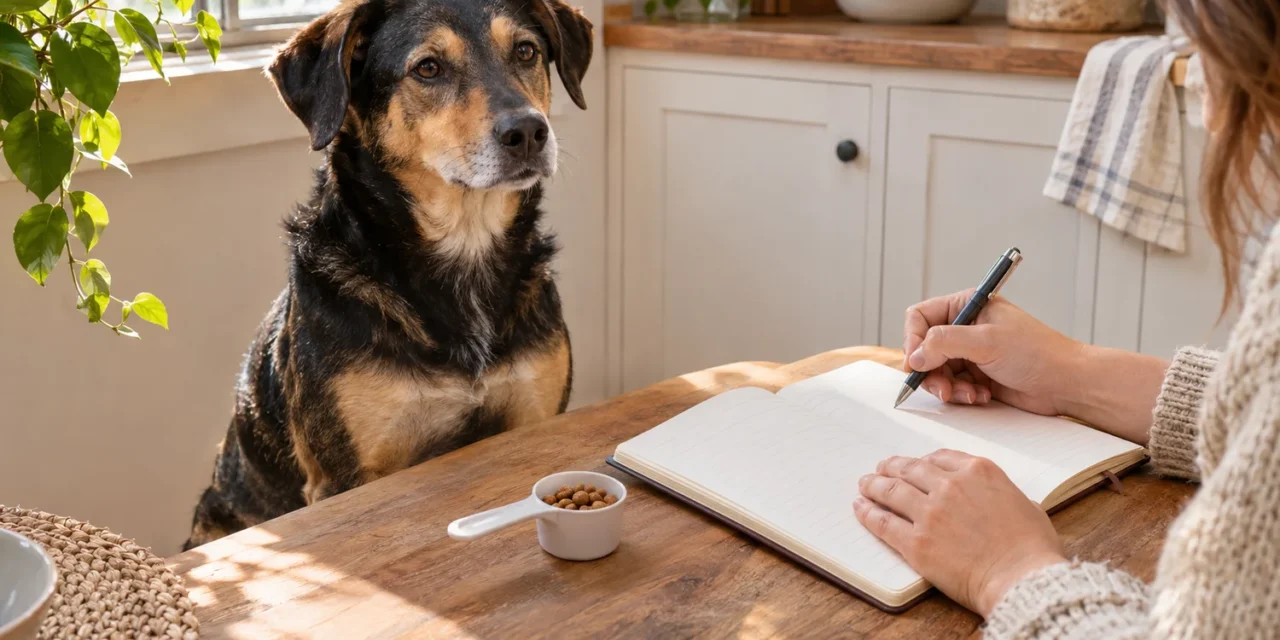
When your dog has been licking their paws or having intermittent loose stools, the last few weeks can blur together. A food diary gives your veterinarian a timeline they can work with. It shows what went into the bowl, what slipped in between meals and what you actually saw. You can start with one note on your phone and add to it as things happen.
Start with the food your dog already eats
On the first page, write your dog’s name, age, most recent known weight and the reason you’re keeping the diary. Give a rough start date for the problem. If the first ear flare happened sometime in September, write “around September” and explain what you remember. A labeled estimate is more useful than a precise date you made up. Add previous diets you can identify from old orders, photos or the clinic record.
For today’s food, capture the whole product name, recipe, format and the size of the package. Take a photo of the ingredient panel and the nutritional adequacy statement. Photograph the lot and date code before the bag goes in the recycling. If you have been feeding the same recipe for months, note when you opened the current bag separately from when you started the recipe. A bag change and a diet change are different events in the timeline.
Record the amount served and how much was left. Use the same unit each day. Grams work well if you have a kitchen scale. If you measure in cups, use a level measuring cup and say so. If you feed half a cup of kibble and two spoonfuls of wet food, log the two amounts and identify both foods. A single entry that says “one bowl” hides the mix.
Count the things that never go in the bowl
Walk through a normal day from the first potty break to bedtime. Include training rewards, dental chews, pill pockets, table food, supplements and flavored medication or preventives. Record access to other pets’ bowls, food toys filled by someone else, and snacks given by a walker, neighbor or daycare. If a chew lasts several days, note roughly how long your dog had it and how much disappeared.
Ask other people in the house to add entries themselves. A shared note works when several people feed the dog. A paper sheet next to the scoop is easier if someone seldom checks the app. Keep the treat wrapper near the sheet or save one clear photo to the note so everyone can use the same name. When you can’t identify an exposure, write “unknown biscuit from neighbor, about half” or “may have reached cat bowl.” That preserves information you might otherwise forget.
List medicines with their names, the date you gave them, and anything you used to get your dog to swallow them. Give your veterinarian that list before changing a product or schedule. If your dog has a veterinarian-directed food trial, the clinic can tell you which treats, rewards and flavored medicines fit the plan and how to handle an accidental exposure.
Describe symptoms in the same way each day
Pick the signs you can reliably see. For itching, record the area and what your dog did. “Licked both front paws for five minutes after the evening walk” is easier to interpret than “bad allergies.” Add whether scratching interrupted sleep or a walk. A photo of the same patch of skin in similar light can show how it changes over time. Give the photos dates or keep them attached to the relevant day’s entry.
For digestive signs, record the time and number of events and describe what you saw. “Two soft stools that held their shape” tells a different story from “twice out overnight with watery stool.” Add whether your dog finished meals, how they were acting and whether anyone else in the house saw another event. If the clinic gives you a stool chart or asks you to track an itch score, use the same scale each time.
Write one short line on ordinary days too. “Usual meals, no unusual exposures, one formed stool, no paw licking seen” gives the veterinarian something to compare with the rough days. If you were at work and another person didn’t check, say “not observed” for that stretch. A day without observations can otherwise look like a symptom-free day.
A sample day you can copy
Monday, 7:00 a.m. Usual kibble, 80 g served and all eaten. One formed stool on the morning walk. 12:30 p.m. Walker gave two small training treats. Brand still unknown. 6:15 p.m. Usual kibble, 80 g served and about 20 g left. 7:30 p.m. Licked front paws for about five minutes after the walk on freshly cut grass. 9:00 p.m. One soft stool that still held its shape. Usual energy at bedtime.
One detail can change how that day reads. If someone started an ear medicine in the morning or the dog got into the cat food, add the event with its best known time. If you hear about the training treats the following day, add a dated note to Monday rather than rewriting the entry from memory. At the end of the week, mark the first symptom, any new food or treatment and the days that looked different.
How to record a limited-ingredient food
If the food you already use is Wellness Simple Lamb & Oatmeal dry food, write down the Lamb & Oatmeal recipe and 26 lb bag size. Lamb and lamb meal are listed animal protein ingredients. The recipe also contains oatmeal, ground brown rice and peas. Logging only “Wellness” or “lamb kibble” would lose those distinctions. Our limited-ingredient dog food guide compares this recipe with other retail options.

Wellness Simple Lamb & Oatmeal · 26 lb
This formula is intended for adult maintenance. For a dog with suspected food allergy, bring its label and your feeding history to the vet. The clinic can use that history to decide if a controlled trial is appropriate, including whether lamb has already been part of your dog’s diet. Retail limited-ingredient foods carry a risk of cross-contact with other proteins, which can make a diagnostic trial hard to interpret.
Take a short summary to the appointment
Put your most helpful details on one page. List when the signs began, how many days you observed them, whether they woke your dog or affected meals, and any food, medication or routine change around that time. Keep photos and daily notes available in case the vet wants to see them. “Licked both paws after four evening walks and once in the morning” gives the clinic a clearer starting point than a stack of undated pictures.
Bring the questions that will help you keep recording consistently. Ask which signs matter most, when to call about changes and what to do if another person gives a treat during a prescribed trial. If your veterinarian sets a follow-up date, put it in the diary and write down which measurements or observations they want. A food diary can reveal a sequence of events. Your vet can assess whether that sequence points toward food, an environmental exposure or another cause.
Start the record while arranging care if your dog is unwell. Call your vet promptly about recurring vomiting or diarrhea, unexplained weight loss or a change in appetite that concerns you. The clinic can advise whether your dog needs urgent care and which details to bring. A few accurate notes are enough to get the conversation started.